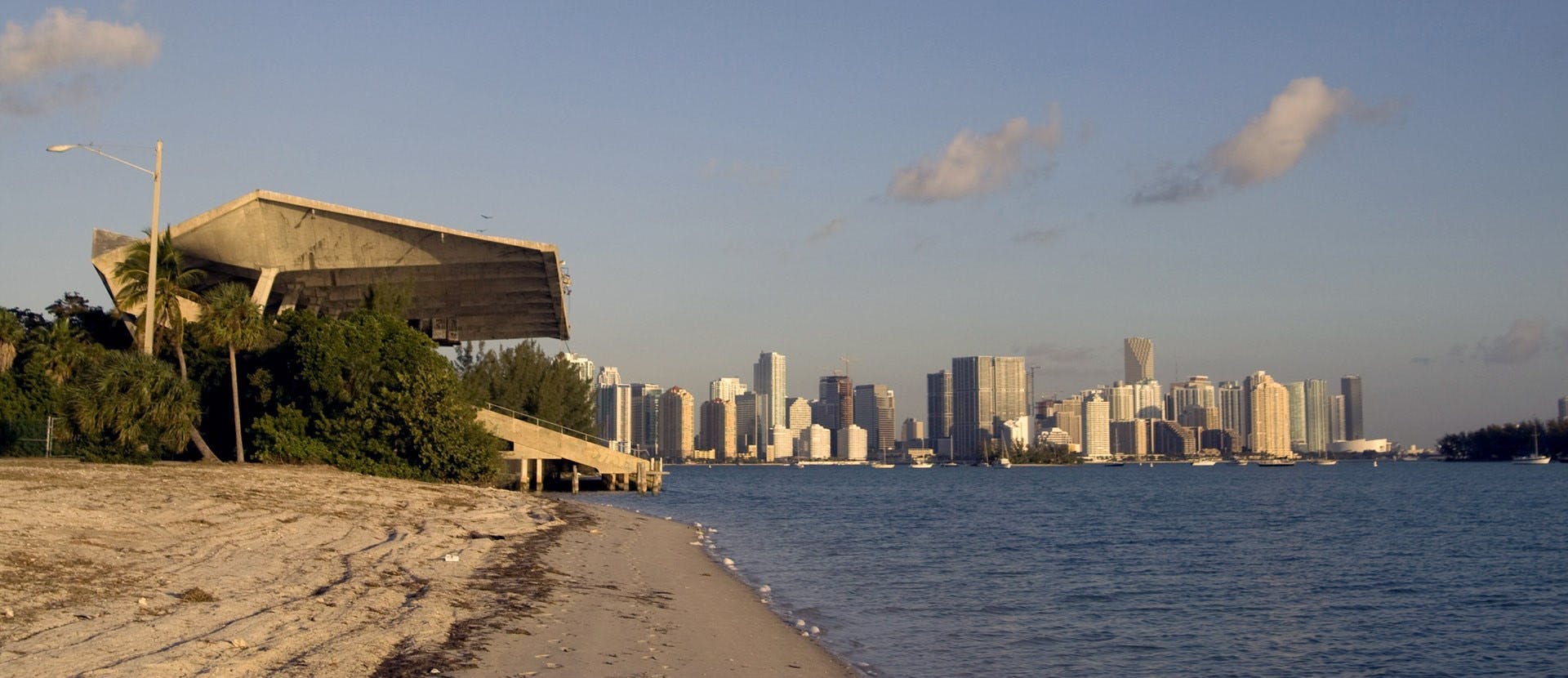
Miami voters have given the long-shuttered Miami Marine Stadium a new chance at life.
In the Aug. 18, 2026, election, approximately 69% of voters approved a measure allowing the City of Miami to move forward with a private management agreement aimed at restoring and reopening the historic Virginia Key landmark.
The result clears a major political hurdle for one of South Florida’s most recognizable : and neglected : waterfront structures. The stadium has stood unused since the early 1990s, when Hurricane Andrew struck South Florida and the city closed the facility after declaring it unsafe.
Under the approved plan, a private venue operator will help develop a restoration and management strategy for the stadium. The goal is to return the concrete icon to public use as a site for concerts, cultural programming, water-related activities, educational programs and community gatherings.
The vote does not mean the stadium will reopen immediately. Detailed construction plans, financing, approvals and a timetable still must be worked out. But after decades of uncertainty, Miami voters have signaled that they want the stadium preserved and put back into service.
A decisive vote for a Miami landmark
The referendum placed the stadium’s future directly before voters. Approval gives city officials the authority to advance a long-term public-private partnership for restoration and operations.
According to reporting from WSVN, the measure passed with a strong majority, reflecting broad support for reviving the site rather than allowing it to remain fenced off and deteriorating.
The proposed agreement involves Global Spectrum L.P., also known as Spectra, a private venue-management company affiliated with Oak View Group. The arrangement could run for as long as 40 years through an initial term and renewal options, according to election-related summaries and previous public reporting.
The company is expected to contribute up to $10 million toward restoration while helping the city create a broader management, construction and financing plan. The agreement also contemplates the future use of the stadium and the adjacent site, including a flexible public space capable of supporting waterfront recreation and special events.
For Miami, the vote represents more than a decision about an aging building. It is also a decision about how the city wants to preserve its architectural identity while creating new gathering places for residents and visitors.
Why Marine Stadium matters
Opened in 1963, Miami Marine Stadium was designed by Cuban-born architect Hilario Candela, who was 28 at the time. The 6,566-seat structure was built as the first purpose-built venue for powerboat racing in the United States.
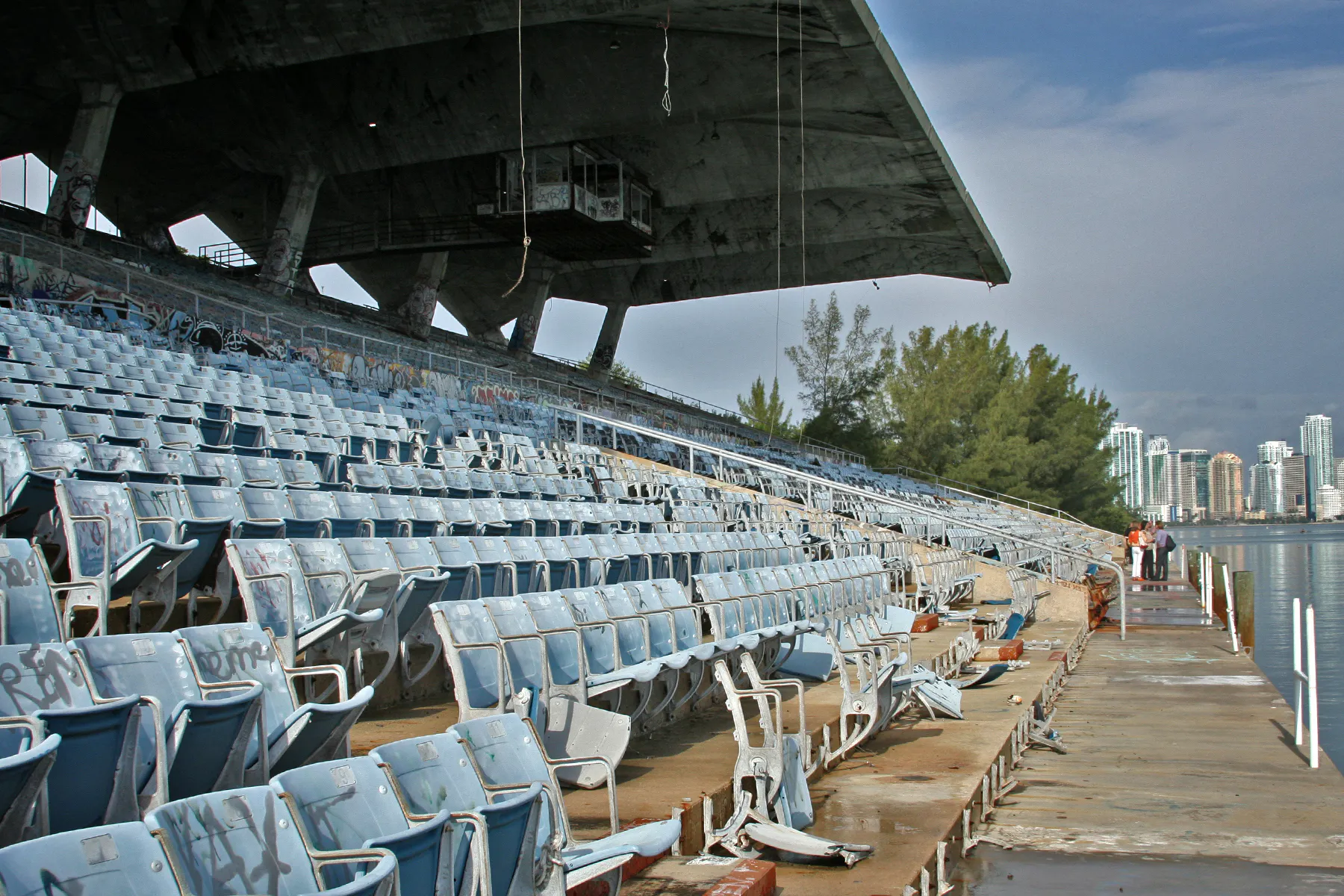
Its defining feature is a dramatic, folded-plate concrete roof extending 326 feet over the grandstand. The cantilevered design gave spectators shade while maintaining an unobstructed view of the water and the downtown skyline.
The stadium’s design reflected the optimism of a rapidly changing Miami. It was modern, open to the water and distinctly tied to the city’s relationship with Biscayne Bay. The structure has since become recognized as an important example of mid-century Modernist architecture.
The World Monuments Fund describes the stadium as a symbol of modernity for a growing city. The organization placed it on its 2010 Watch List, drawing international attention to the building’s deteriorating condition and preservation needs.
From boat races to concerts
Marine Stadium was originally built around the excitement of powerboat racing. Its basin hosted nationally televised competitions and major racing events that drew crowds to Virginia Key.
But the venue quickly became much more than a stadium for boats.
A floating stage allowed musicians to perform over the water, creating a setting unlike any other in the region. The venue hosted concerts, boxing matches, water shows, religious services, campaign rallies and community events.
Its history includes performances and appearances by artists and public figures ranging from Jimmy Buffett and Gloria Estefan to Sammy Davis Jr. and President Richard Nixon. The stadium also appeared in the 1967 Elvis Presley film Clambake, which featured a speedboat-racing sequence filmed at the site.
For generations of Miami residents, the stadium was part of the city’s shared cultural memory. It was a place where the skyline, the bay and live entertainment came together in one setting.
That history is one reason preservation advocates have continued to push for restoration rather than demolition.

What happened after Hurricane Andrew?
Hurricane Andrew made landfall in South Florida in August 1992, devastating communities across Miami-Dade County. In the aftermath, Miami Marine Stadium was declared unsafe and closed to the public on Sept. 18, 1992.
The city initially argued that the stadium had sustained serious hurricane damage and sought federal funds to demolish it. However, an engineering study commissioned through the facility’s insurance process concluded that the structure had not suffered the type of catastrophic damage that would require demolition.
Preservation advocates have long pointed to that study, which identified deferred maintenance and repair needs as the larger concern. The city ultimately returned the federal demolition money, but the stadium remained closed.
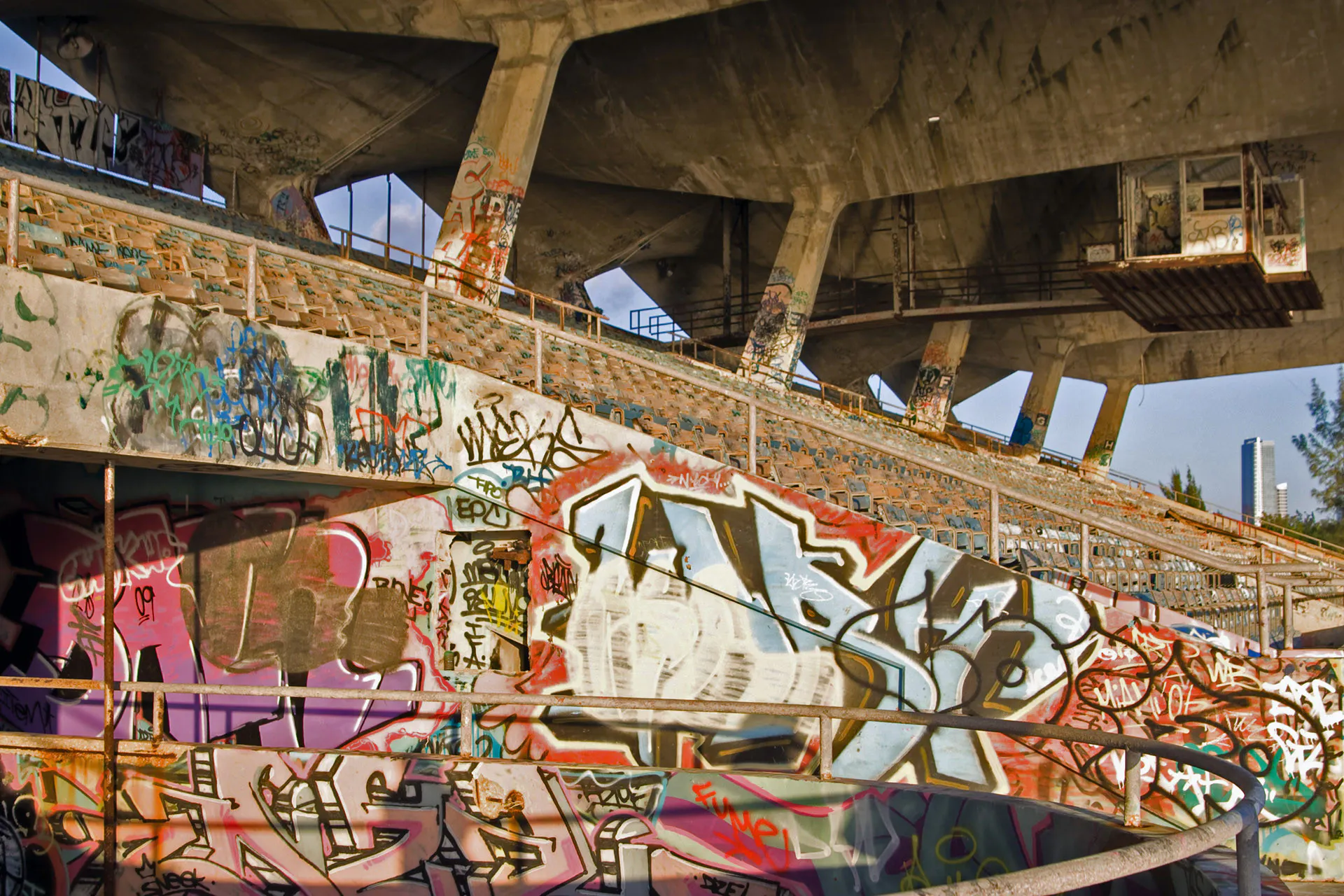
Over the next three decades, the site deteriorated. Exposure to saltwater and weather, vandalism and a lack of regular maintenance left the grandstand heavily weathered. Graffiti covered many of its surfaces, transforming the abandoned venue into an unofficial outdoor canvas while also underscoring the urgency of preservation.
In 2008, Miami designated the stadium as a historic landmark. It was later listed on the National Register of Historic Places, reinforcing its architectural and cultural importance.
A Friends of Miami Marine Stadium timeline documents the venue’s history, its years of advocacy and past restoration efforts.
What happens next?
The referendum’s approval is an important step, but the restoration process is still ahead.
The city and its private partner will need to determine the full scope of structural repairs, modernize utilities and life-safety systems, address accessibility requirements and develop plans for seating, restrooms, backstage operations and event logistics.
The restoration must also balance the building’s historic character with the practical demands of a contemporary venue. Any future concerts or public events will require updated infrastructure, security plans, transportation coordination and careful management of the surrounding Virginia Key environment.
The adjacent property could also become part of the site’s renewed identity. Plans have discussed a flexible public park or waterfront event area that could support recreation on ordinary days and larger gatherings during special events.
That combination of preservation and public use will be closely watched. Residents want the stadium protected, but they also want it accessible. The landmark’s future will depend on whether restoration plans honor its original design while making the site useful for today’s Miami.
No reopening date has been announced.
Still, Tuesday’s vote changes the outlook. For years, the stadium represented an unfinished chapter in South Florida’s architectural and cultural story. Now, the city has a path toward writing the next one.
A new chapter for South Florida events
If restoration moves ahead, Miami Marine Stadium could once again become one of the region’s most distinctive venues for South Florida events.
Its waterfront setting could support concerts at sunset, boat races, cultural festivals, public art, educational programs and community celebrations. The site’s history also creates an opportunity to connect longtime Miami residents with younger generations who know the stadium primarily as a striking, graffiti-covered structure across from the city skyline.
For readers following the latest South Florida news, the referendum is a major local development with implications for preservation, tourism, public space and the region’s entertainment landscape.
The 69% vote does not bring back the Marine Stadium overnight. But it does deliver a clear message from Miami voters: this landmark should not be left behind.
For more coverage of Miami’s cultural institutions, local developments and upcoming arts and entertainment stories, stay connected with South Florida Digest.