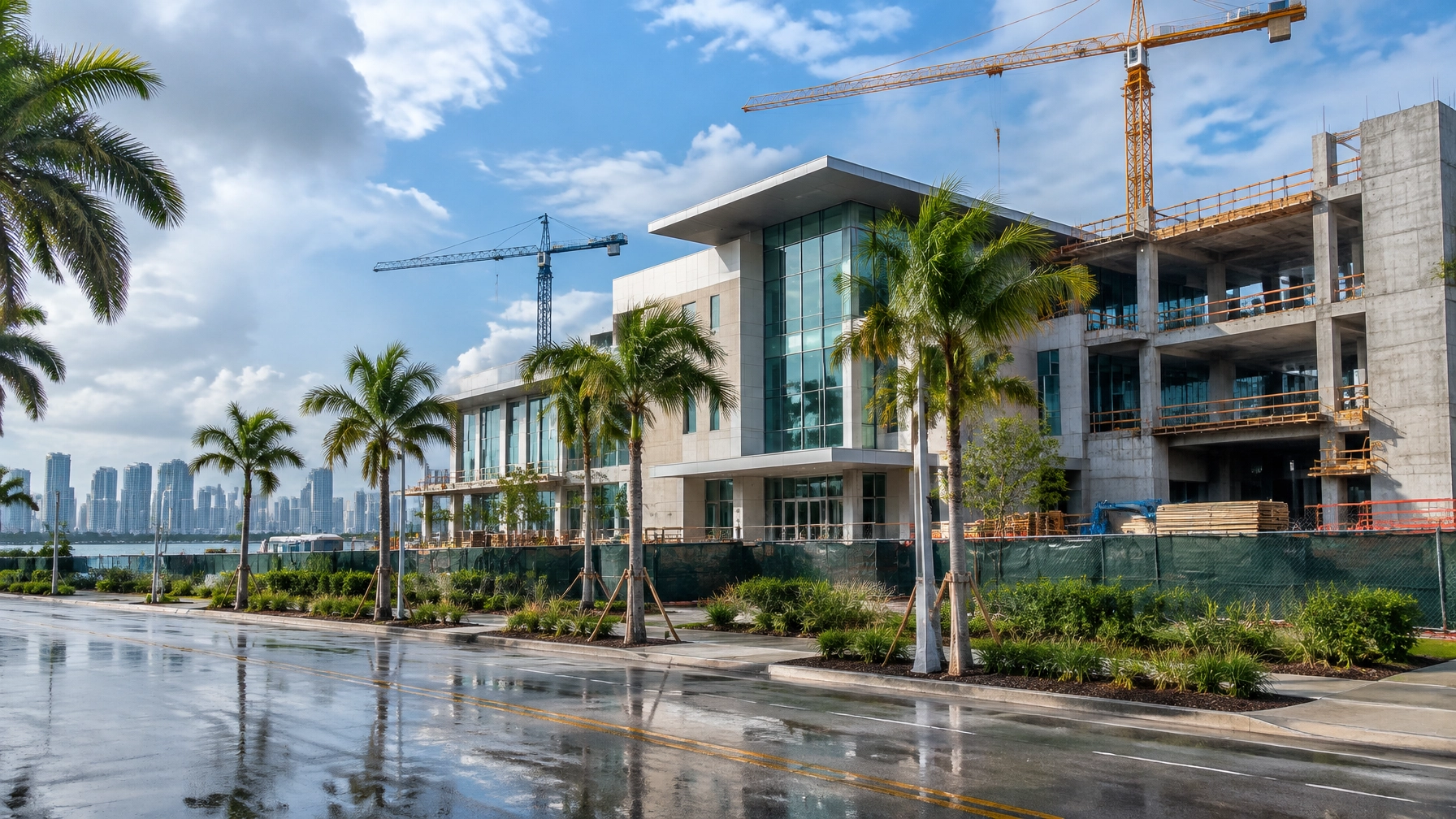
The city’s Referendum 1 would authorize $450 million in borrowing for police and fire facilities. The city says the current capital-projects debt millage rate would not rise, but property owners would still face an added tax obligation to repay the bonds.
With eight days until Miami’s Nov. 3 special election, voters are weighing a $450 million public-safety bond, and a debate over what it means to say there will be “no new taxes.”
The city’s Referendum 1, branded “Safe and Ready,” would authorize general-obligation bonds to replace the downtown police station with a new public-safety headquarters and to repair and expand fire stations. The debt would be repaid through ad valorem property taxes.
Mayor Eileen Higgins supports the measure, arguing that Miami’s police and fire facilities need major repairs and replacement. Opponents, including city commissioners Damian Pardo and Christine King, say the proposal understates the long-term price and should have received more financial scrutiny before reaching voters.
The distinction at the center of the argument is straightforward but consequential: the city says the bond would not raise its existing capital-projects debt millage rate. That does not mean the borrowing would add nothing to property-tax bills.
What the $450 million would fund
The proposed bond divides the authorization into two main categories. According to reporting by The Florida Press and the Miami-Dade County sample ballot, $305 million would fund a new public-safety headquarters at Miami Freedom Park, replacing the downtown police station. The remaining $145 million would go to fire-station repairs and four new stations in underserved areas.
The city’s ballot language describes the proposal as a bond issue for police, fire-rescue and other public-safety facilities. It also specifies repayment through property taxes and states that the current capital-projects debt millage rate of 0.5935 would not increase.
The facility needs are not in serious dispute. In an interview with WLRN, Higgins described deteriorating conditions at police headquarters and fire stations, including flooded basements, damaged ceilings and outdated wiring. The Miami Times reported her saying some fire stations are so old they need parts sourced from eBay.

Illustrative image; not a photograph of a specific Miami fire station.
Higgins has argued the bond would let the city move more quickly on replacements and repairs. In her Oct. 23 Miami Herald opinion article, she made the case for approving the proposal, including the need for new fire stations and updated facilities.
“No increase” to the rate is not “no tax impact”
The city estimates the bond would cost an average homeowner about $9.20 per month. That is an average, not a fixed charge for every property. The actual amount can vary based on assessed value and the terms and timing of bond sales.
The city’s position is that the capital-projects debt millage rate will remain at 0.5935. But the bond would still be repaid through property taxes, meaning property owners could owe more even if that rate does not rise. That distinction is why “no new taxes” has become a campaign flashpoint: one phrase refers to the millage rate, while the other may be understood as a promise that tax bills will not increase.
There is also a difference between the amount voters are being asked to authorize and the total amount expected to be repaid over time. The $450 million is the borrowing for projects. The Miami Today reported an estimated repayment cost of about $795 million when principal, interest and issuance costs are included. Opponents have described the lifetime cost as approaching $800 million.

Illustrative image; no specific tax bill or homeowner is depicted.
The higher figure is not an additional construction budget. It reflects the estimated cost of borrowing and repaying the principal over time. Final costs depend on bond terms and financing conditions.
Supporters cite failing facilities; critics cite debt and process
Higgins has presented the bond as a way to address infrastructure problems that the city must confront regardless. The mayor’s argument is that modern police and fire facilities, along with additional stations in underserved areas, are important to public safety and that issuing debt would allow the city to begin work sooner.
A photo from WLRN’s report shows Higgins speaking at a construction site for Miami’s new civic center.
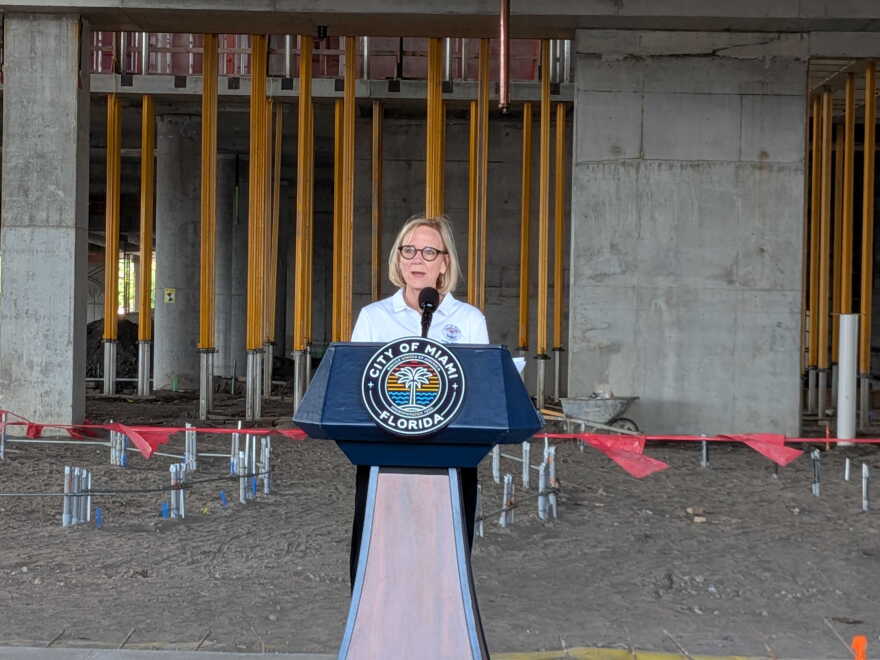
Photo: WLRN. The image is from a press conference at the civic-center construction site, not a police or fire facility.
Pardo and King have challenged both the price and the way the measure was presented. Their concerns include the total repayment cost and the city’s existing debt and financial pressures. WLRN reported that the city has significant obligations, including pension liabilities, and cited a recent city financial report showing a deficit in government activities. The outlet also reported that public-safety expenditures were over budget in its July 2026 monthly report.
That context does not determine whether the bond is financially responsible, but it forms part of the debate over whether Miami should take on more debt now. Supporters point to the need to address aging facilities; critics say voters should weigh that need against the city’s other obligations and the long-term cost of borrowing.
The Miami Herald editorial board recommended a “No” vote, arguing that alternatives had not been fully explored, while acknowledging that police and fire facilities need attention. The disagreement is therefore not simply whether the buildings need work. It is whether this bond is the right way to pay for it.
A separate dispute over campaign messaging
The bond campaign’s use of newspaper coverage has also drawn scrutiny. In an Oct. 23 report, the Herald examined whether a mayor-backed committee’s text messages and advertising could lead voters to think the newspaper supported the referendum.
The Herald’s editorial board had, in fact, recommended voting no. The committee said its ads accurately reflected a shared understanding that the facilities need repairs. The episode has added a messaging dispute to the underlying argument over taxes, debt and public safety.
Oversight is another concern. Miami Today reported that the bond reached the ballot without prior review by the city’s Finance and Audit Committee. At an Oct. 8 meeting, commissioners discussed requiring earlier committee review of major debt proposals. Pardo said such a review could have given commissioners a more detailed financial assessment before they considered the bond. City officials also raised concerns about the committee’s staffing and ability to meet consistently.

What voters are deciding on Nov. 3
The ballot question asks voters to authorize up to $450 million in general-obligation borrowing for specified public-safety projects. It does not ask them to approve an immediate $450 million cash payment, and it does not set the final lifetime cost of repayment.
Voters are being asked to weigh the proposed projects against the expected property-tax obligation, the estimated interest and issuance costs, the city’s broader financial picture and the city’s stated plan to keep its current capital-projects debt millage rate unchanged.
Early voting began Oct. 19, according to WLRN. The election is Tuesday, Nov. 3. The official ballot and election details are available through the City of Miami election notice and the Miami-Dade sample ballot.
The choice is ultimately about more than a slogan. The city says the millage rate will not rise; the proposal still creates a property-tax obligation to repay new borrowing. With the vote eight days away, those two facts, and the difference between them, are central to understanding Referendum 1.