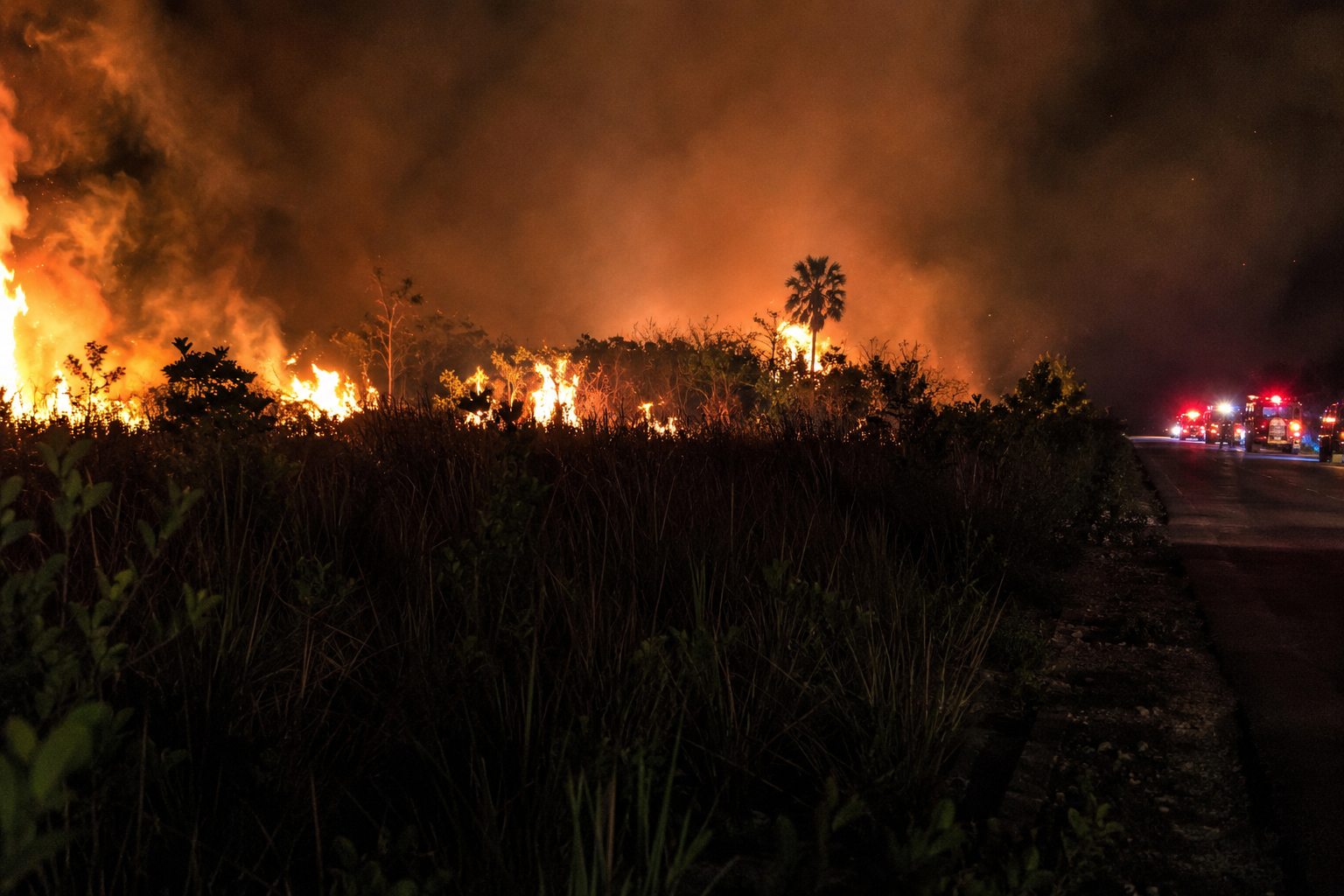
June heat brings growing concern for South Florida residents as a series of brush fires continue to spread across the Florida Everglades, North America’s largest subtropical wetland system, scorching thousands of acres within weeks.
Fueled by drier than normal conditions, extreme temperatures, and strong winds, the fires have burned more than 25,000 acres, starting in western Miami-Dade County, and now weeks later igniting parts of northwest Broward County. First responders from local fire rescue departments, the Florida Forest Service, and other emergency response agencies have worked tirelessly around the clock to contain the blazes and protect nearby communities.
These brush fires have produced thick clouds of smoke that have drifted across Counties, covering the sun and reducing visibility on major expressways. Residents have reported smoky conditions, ash fall, and concerns about respiratory health, particularly among children, the elderly, and individuals with pre-existing breathing conditions. One resident in Weston reported coming out of her office to find her “car covered in ash” from the Miami Dade Everglades fires nearly 35 miles away.
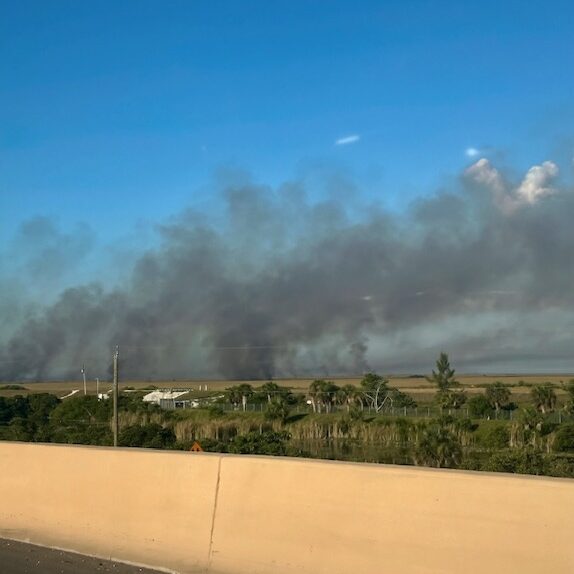
Air quality advisories have been released over the past few weeks, even forcing locals to evacuate their homes for risk of flames reaching residencies and local parks. Several road closures were implemented throughout Miami Dade as emergency officials urged drivers to use caution as smoke frequently created hazardous driving conditions.
Brush Burn Strikes Again, this time in Broward County
South Florida is currently in a rainfall deficit with record low rain in Fort Lauderdale creating a D1 drought throughout west Broward, rising to severe levels of D2 and D3 drought traveling out to the Everglades Agricultural Area (EAA) regions according to the Drought Information Statement for South Florida published by National Weather Service Miami-South Florida. These conditions create the perfect environment for a wildfire.
Wildfires are often a natural cycle in any wetland system such as the Everglades, but certain environmental conditions can increase both their frequency and intensity. The primary cause of these prevailing fires is the accumulation of dry vegetation from disturbed hydrology, which act as fuel for something as simple as a lightning strike.
Lightning is quoted to be the root cause of both wild brush fires in Miami Dade and Broward county on both occasions. Particularly those associated with summer heat and thunderstorms, lightning is a common natural ignition source in the state of Florida and can quickly spark fires when the ground is dry. Human activities, such as discarded cigarettes, vehicle malfunctions, unauthorized burns, and unattended campfires, can also contribute to fire outbreaks.
Land management practices play a critical role in reducing wildfire risk. Controlled burns, also known as prescribed fires, are intentionally set and carefully monitored by land managers to remove excess vegetation before accumulating to dangerous levels. When fewer prescribed burns occur due to weather limitations, water resource constraints, or other factors, larger amounts of dry brush build up across any given landscape.
The Florida Forest Service intentionally set controlled fires to contain and choke out the wild brush fires that occurred in the Everglades Agricultural Area over the past few weeks, as seen along the levees at Sawgrass Trailhead in Coral Springs, Florida this afternoon, June 30th, 2026. This helps by limiting the breeding ground for any continuing smoldering as the day reaches critical temperatures, and ground moisture evaporates.
Though wildfires are widely recognized as a natural restorative benefit for nutrient rich soil to a diverse habitat, the wildlife often suffer displacement in the meantime. Even worse, when fires go on for too long, the very foundation of the Everglades, also known as peat soil becomes compromised. This is when those ‘natural’ wildfires become a serious problem.
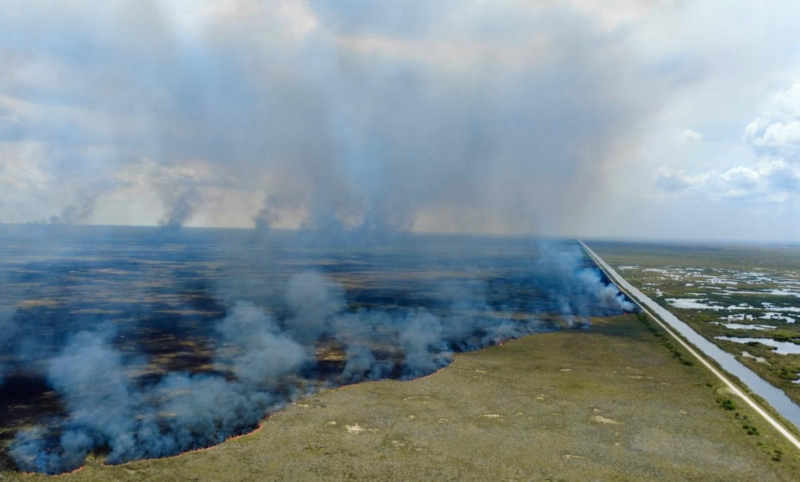
The wild brush fires are now 60% contained in Broward County according to Sun Sentinel, June 30th, 2026.
But how do we combat this? Prevention through environmental restoration.
Rather than solely relying on firefighting the present flames, the South Florida Everglades hydrology must first be restored. There are organizations and agencies like The Everglades Foundation, South Florida Water Management District, and Miccosukee Environmental Protection Agency through the Miccosukee Tribe of Indians of Florida who work to store and release water along the man made canals for situations like these. Over-development in South Florida has called for hundreds of years of draining the largest subtropical wetland system in America for industrial progression. This results in dried up wetlands, wildlife disturbance, and more natural disasters. These resource management crews rely heavily on rainfall during annual wet seasons. However, in record low years like 2026, these organizations turn to redirecting freshwater from the Biscayne Aquifer, Florida Bay, and Lake Okeechobee, which requires steep financial funding and resources.
El Niño is factored into environmental conditions
Any climate event, particularly like El Niño-Southern Oscillation (ENSO), a recurring cycle of ocean and atmospheric conditions in the tropical Pacific Ocean, can create unpredictable and unstable weather conditions for different regions around the globe. South Florida can experience shifts in precipitation that contribute to periods of drought and unusually warm temperatures while also receiving more rainfall and low pressure systems than normal. As temperatures continue to rise and weather patterns become increasingly variable, researchers are closely monitoring how ENSO-related climate fluctuations may contribute to future wildfire activity throughout South Florida. The recent fires serve as an example of how global climate systems can have direct local impacts on ecosystems, air quality, public safety, and natural resource management. Firefighters look forward to more rainfall to help steady these fire predictions, as the ground simply cannot stay wet in ultra sunny conditions.
Footage below shows burning black smoke captured by driver on Sawgrass Expressway North Bound, from I-595 W to Atlantic Boulevard, June 29th, 2026, 5:50PM.
As South Florida looks toward the wet season, these fires highlight the importance of proactive prescribed burning programs and hydrological environmental stewardship to protect both communities and the natural landscapes that define what is left of the native ecosystem. As this ongoing situation becomes more contained and the smoke clears, this summer will continue to shape conversations about resilience and environmental preparedness for years to come.
Written by Rachel Taylor