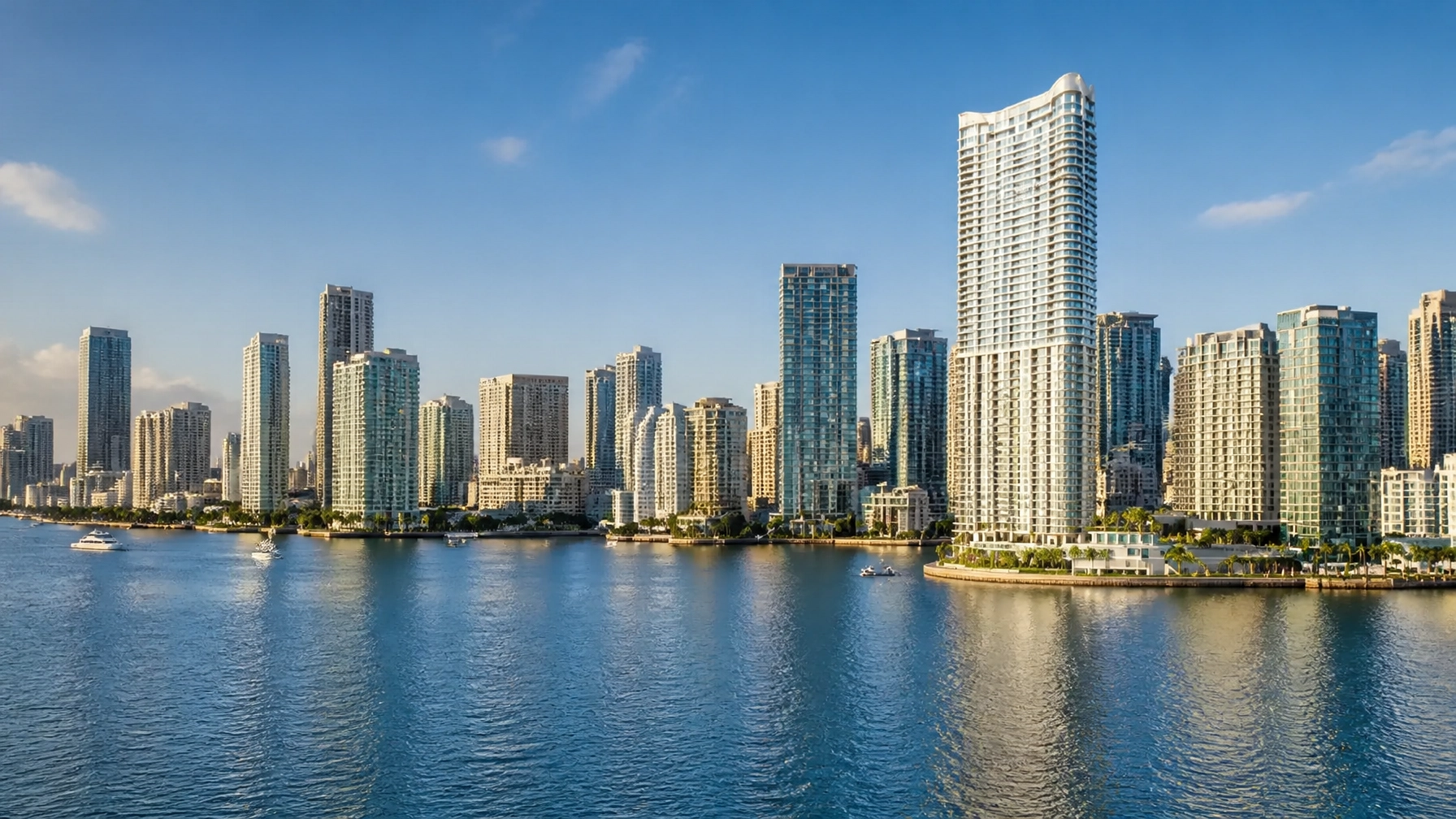
Miami-Dade’s condo market is showing stronger sales and falling inventory, although buyers still retain significant negotiating power. (South Florida Digest)
Miami-Dade’s condominium market is beginning to turn a corner.
Existing condo sales rose 11% year over year in July, marking the clearest sign yet that demand is returning to a segment that has spent much of the past several years under pressure. The strongest gains came in the $400,000 to $500,000 price range, where sales increased approximately 12%.
The shift does not mean South Florida has returned to a seller’s market. Miami-Dade still has roughly 12 months of condo supply, a level that gives buyers more choice and leverage than sellers. But inventory declined about 12% from a year earlier: the first sustained year-over-year drop since the condominium safety and reserve requirements adopted after the 2021 Champlain Towers South collapse.
That combination: rising sales, declining listings and elevated supply: makes the latest figures especially important for anyone tracking Miami real estate.
Condo sales lead Miami-Dade’s July gains
According to July statistics reported by MIAMI REALTORS® and RWorld, Miami-Dade recorded 1,935 total residential closings, up 8.6% from the same month last year.
The county’s major housing categories all posted gains:
- Existing condo sales rose 11.4%, from 921 closings to 1,026.
- Single-family home sales increased 5.6%, from 861 to 909.
- Total home sales climbed 8.6%.
- Sales of homes priced at $1 million and above increased 15.5%.
- Condo sales between $400,000 and $500,000 rose 12.6%.
Condos are therefore growing faster than single-family homes, a notable development in a market where buyers have faced higher insurance costs, stricter lending requirements and uncertainty over building assessments.
The median Miami-Dade condo price stood near $400,000 in July, down modestly from the year before. That soft pricing, combined with more transactions, suggests buyers are finding opportunities without facing the rapid price escalation seen during the pandemic-era boom.

Inventory is finally moving in the right direction
For years, South Florida condo buyers benefited from an unusually large pool of available units. Much of that inventory accumulated after the Champlain Towers South collapse, when lawmakers and condominium associations moved to strengthen structural inspections, reserve funding and long-term maintenance planning.
Those changes were necessary, but they also produced financial pressure across older buildings. Associations raised monthly fees, issued special assessments and began planning for major repairs. In some cases, lenders became more cautious about financing units in buildings with unresolved structural or reserve concerns.
The result was a slower and more selective condo market.
Now, Miami-Dade’s active condo listings have fallen by roughly 12% year over year. The decline has continued for several months, making July the latest point in what appears to be a sustained trend rather than a one-month fluctuation.
That matters because inventory is one of the most important signals in real estate. More listings generally give buyers greater negotiating power. Fewer listings can eventually create competition, particularly for buildings with strong reserves, completed inspections and manageable association fees.
Still, 12 months of supply remains firmly within buyer’s-market territory. A balanced market typically carries about six to nine months of inventory. Miami-Dade condo buyers are not yet facing a shortage, but they may be moving closer to the end of the market’s excess-supply cycle.
The rebound is strongest in the middle of the market
The $400,000 to $500,000 segment is emerging as the market’s most active zone.
That price range includes many of the units sought by local professionals, first-time buyers, downsizing homeowners and out-of-state residents looking for a primary or second home. It is also a price point where buyers can find access to Miami-Dade’s employment centers, transit corridors and waterfront communities without entering the county’s luxury market.
The segment’s performance suggests that affordability remains a central factor in the recovery. Buyers may be willing to re-enter the market when prices are relatively accessible, sellers are open to negotiation and buildings can demonstrate sound financial management.
For prospective buyers, the building itself may be as important as the unit. A lower asking price does not necessarily represent a bargain if the association has underfunded reserves, pending litigation, unresolved inspection issues or a large assessment on the horizon.
In the current market, due diligence should include a review of:
- The condominium association’s reserves and budgets.
- Recent structural and milestone inspection reports.
- Current and planned special assessments.
- Master insurance coverage and deductibles.
- The building’s approval status with major lenders.
- Monthly fees and the services they include.
- Rental, pet and renovation restrictions.
The buyer’s advantage is not simply the ability to negotiate on price. It is also the ability to be selective.
Luxury sales show a different side of South Florida real estate
While the mainstream condo market is still working through elevated supply, luxury housing is gaining momentum.
Sales of Miami-Dade homes priced at $1 million and above rose approximately 15% in the latest figures highlighted by the Miami Herald. Broward’s luxury market posted an even stronger increase, with sales up about 34% year over year.
The high-end market is being supported by wealthy newcomers from other states, particularly professionals and executives relocating from higher-tax markets. The average salary of recent out-of-state arrivals has been reported at roughly $140,000, reflecting the role of higher-earning households in the region’s housing demand.
These buyers do not always compete for the same properties as local condo purchasers. Many are looking at waterfront homes, new construction, private residences and luxury towers in areas such as Brickell, Miami Beach, Coconut Grove, Coral Gables, Fort Lauderdale and Boca Raton.
But their arrival affects the broader market. Wealth migration supports employment, retail, restaurants, construction and professional services. It also places additional pressure on land and housing costs, particularly in neighborhoods close to the coast and major business districts.
Cash remains another important factor. The July market data showed that cash purchases accounted for nearly half of Miami-Dade existing condo sales. Cash buyers are less exposed to mortgage-rate changes and can often close faster, giving them an advantage even in a market where financing-dependent buyers have more negotiating power.

What the numbers mean for buyers and sellers
For buyers, the latest data points to a window of opportunity: but not necessarily a reason to rush.
The market still offers room to negotiate on price, closing costs, repairs and association-related credits. Buyers may also have more time to compare buildings and neighborhoods before making an offer. That is particularly valuable in a condominium market where financial health and long-term maintenance can vary sharply from one property to the next.
The strongest position belongs to buyers who are prepared. A mortgage preapproval, proof of funds and a clear understanding of monthly carrying costs can make an offer more competitive. Buyers should also calculate taxes, insurance, association dues and potential assessments before deciding what they can comfortably afford.
Sellers face a more complicated environment. The decline in inventory is encouraging, but 12 months of supply means a listing still has to compete for attention. Units in well-maintained buildings with updated interiors, realistic pricing and clear documentation are more likely to stand out.
Overpricing could be especially risky. July’s sales growth does not mean every condo is gaining value at the same pace. The market is rewarding properties that align with buyer expectations, while units with high fees, deferred maintenance or financing obstacles may continue to sit.
A recovery, not a return to the boom
The latest Miami-Dade figures represent progress, but they should be read as an early-stage recovery rather than a full market reversal.
Condo sales have improved. Inventory is falling. Mid-market demand is strengthening, and luxury activity remains robust. Yet financing remains more difficult for many buildings, insurance costs remain elevated and buyers continue to scrutinize association finances.
That tension defines the current market. South Florida remains attractive to affluent newcomers, investors and lifestyle buyers, while local purchasers are looking for value and stability. Those forces are bringing more activity back to Miami-Dade condos: but they are not eliminating the need for caution.
For now, the message is clear: Miami-Dade’s condo market is healthier than it was a year ago, but buyers still have leverage. The next stage of the rebound will depend on whether inventory continues to decline, whether lending becomes easier and whether prices begin to rise alongside sales.
South Florida’s housing market is moving again. The question is how quickly: and who will benefit most as momentum builds.
For more coverage of housing, development and business across the region, follow South Florida Digest.