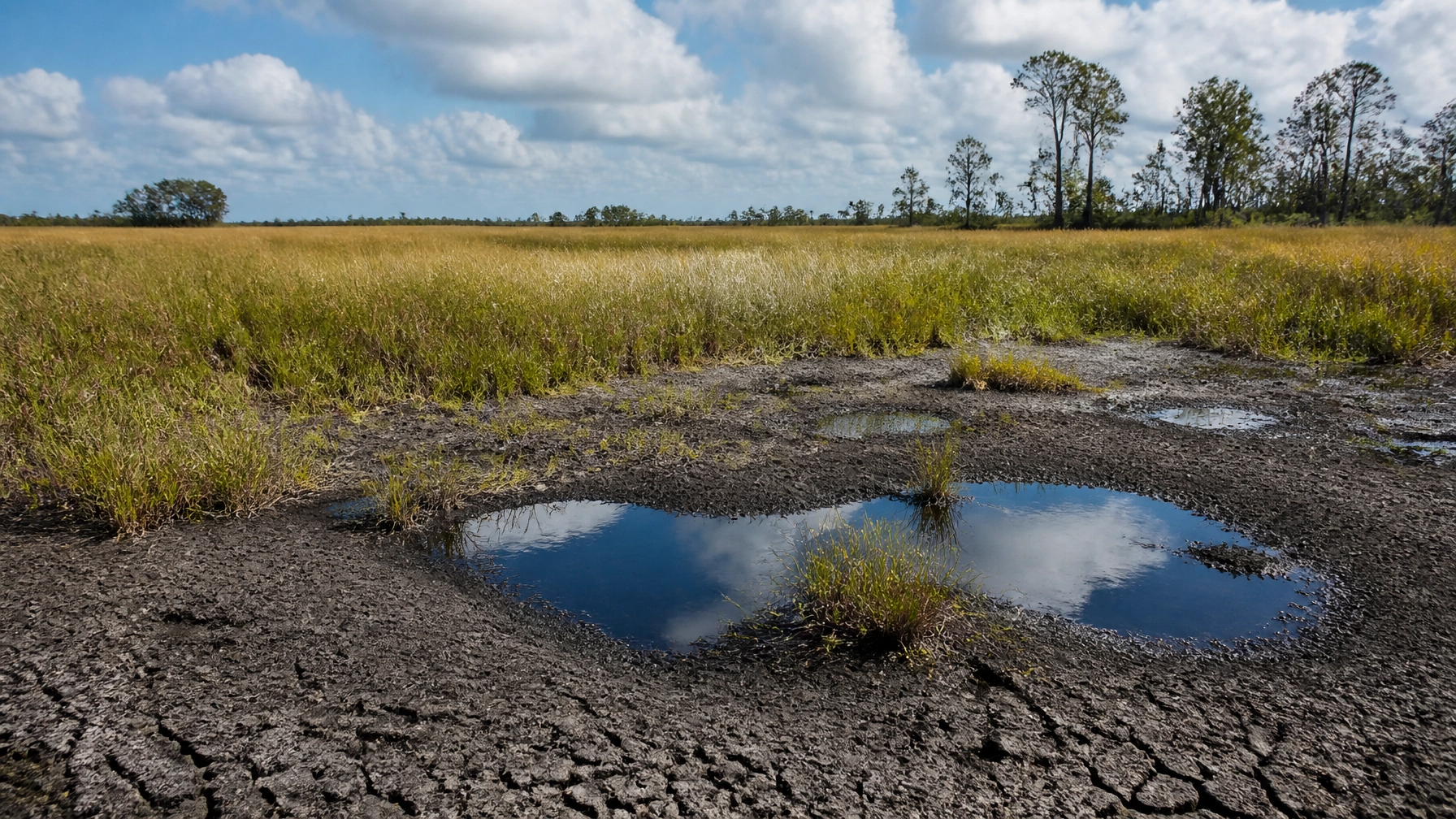
Two consecutive years of unusually dry conditions have pushed parts of the Everglades well beyond a typical seasonal dry-down, reducing water levels, shrinking aquatic habitat and increasing pressure on wildlife, groundwater supplies and fire management across South Florida.
The latest detailed drought statement from the National Weather Service’s Miami office, issued June 18, found that most interior areas of South Florida remained in severe drought, while portions of interior South Florida and northeastern Glades County were classified as being in extreme drought. Conditions had improved in some western and southern areas after heavier rainfall, but forecasters warned that drought could persist across interior areas through September.
The effects have been uneven. Some urban and coastal areas received enough rain to improve short-term water-supply conditions, while interior marshes and key conservation areas continued to show substantial hydrologic deficits.
Water levels remain below normal across key parts of the system
South Florida’s wet season normally supplies most of the region’s annual rainfall, recharging wetlands, lakes and aquifers after the dry season. The recent drought began after a weak or early-ending wet season and continued through much of the 2025–26 dry season.
According to the June 18 National Weather Service drought statement, rainfall across the South Florida Water Management District was generally below normal during the first part of the 2026 wet season. From May 15 through June 17, rainfall in Water Conservation Area 3 was 66% of normal, while the Everglades National Park area received an estimated 84% of normal rainfall. Over the previous 180 days, Water Conservation Area 3 had received only 62% of normal rainfall, and Everglades National Park had received 83%.
Those deficits have translated into lower water levels.
On June 17, Lake Okeechobee stood at 11.07 feet, about 2.12 feet below the normal level of 13.13 feet for that date. The lake is a major component of South Florida’s water-management system, and its low stage limits the amount of water available for supply, ecological deliveries and other managed uses.
Water Conservation Area 3, which covers a large portion of interior Miami-Dade County, was at 7.94 feet: 1.66 feet below the reported normal level of 9.60 feet. By comparison, Water Conservation Areas 1 and 2 were slightly above normal at the time of the statement, illustrating how rainfall, geology and water-management operations can produce sharply different conditions within the broader Everglades system.
The Everglades Foundation has reported that water levels in Everglades National Park were more than six inches lower than the previous year and more than a foot lower than two years earlier. The foundation also described parts of the ecosystem as facing a water deficit of roughly two feet.
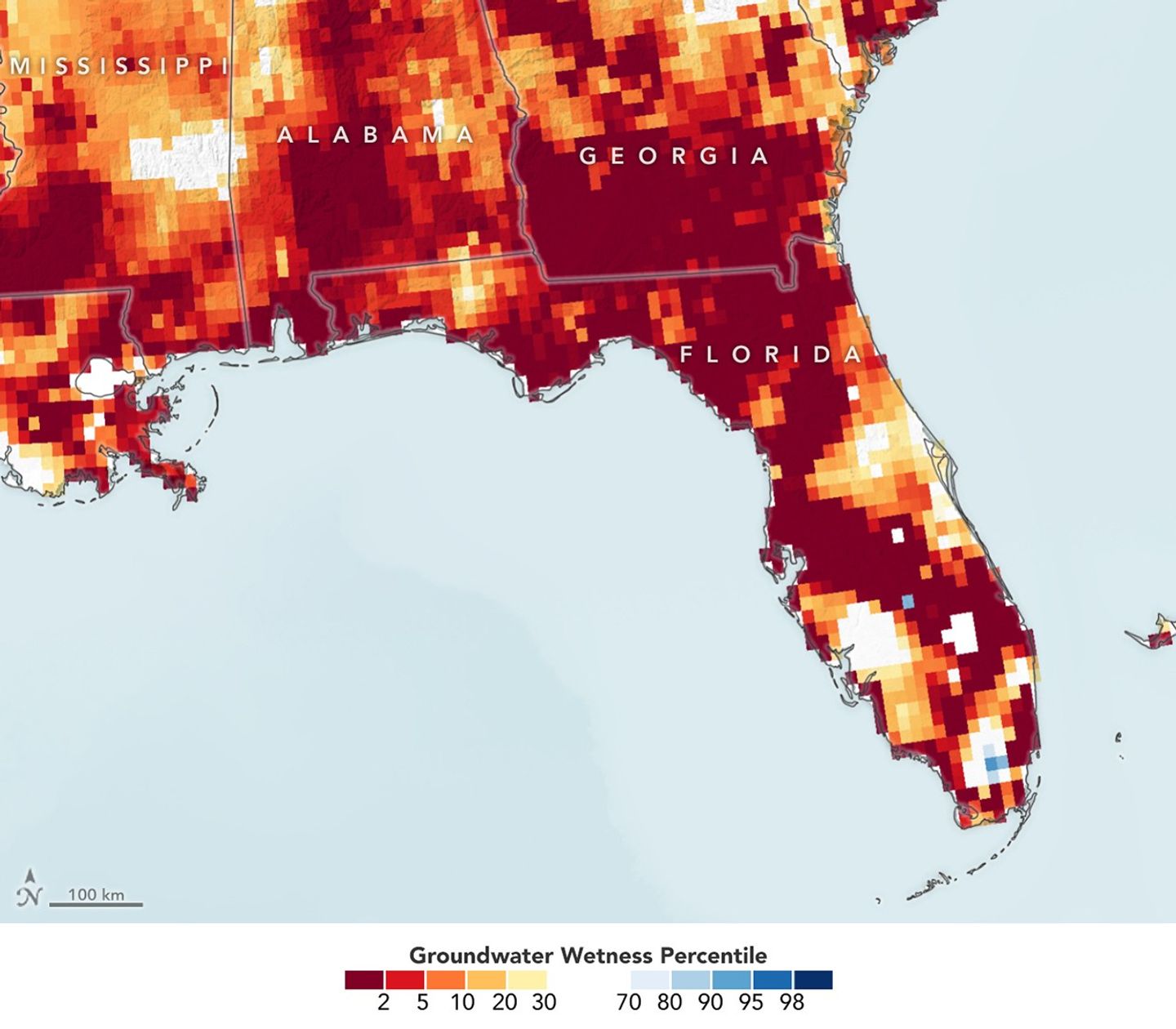
NASA’s Earth Observatory reported in April that the 2025–26 drought was the most severe to affect Florida since 2012, based on its extent and intensity. Satellite and ground observations showed unusually low groundwater storage in parts of the state.
Wildlife is being squeezed into smaller areas
A drought changes the way water moves through the Everglades. During a normal dry season, water gradually recedes and concentrates fish and other prey in shallow pools. That seasonal pattern helps wading birds feed and can support nesting.
A prolonged drought can make the dry-down deeper, earlier and more extensive. When shallow sloughs disappear, fish and aquatic invertebrates lose habitat. Predators are then forced to compete for food in a shrinking number of ponds, canals and deeper depressions.
Marshall Jones, a fifth-generation Gladesman, told CBS News Miami that the area he observed had a water deficit of about two feet. He estimated that fish populations there had fallen by more than 98% and said the most recent rookery season was the worst he had seen, with more than 98% nest abandonment.
Those figures describe Jones’ observations in a particular part of the Everglades rather than a system-wide scientific census. They nonetheless indicate the severity of conditions in some areas and reflect the ecological consequences of losing shallow-water habitat during the nesting season.

Wading birds: including herons, egrets, ibises and wood storks: depend on specific water-level patterns. If water remains too deep, prey can be difficult to capture. If water disappears too quickly, fish and crayfish may die or move out before adults can feed their young.
Alligators, turtles and other reptiles are also affected. As marshes dry, animals concentrate in deeper pools and canals, increasing competition and exposure to heat. Jones told CBS that some turtles had died after being left in sun-baked conditions.
The drought may produce isolated benefits for some species. Drier nesting conditions can reduce flooding of alligator and turtle nests, potentially increasing hatchling survival in certain areas. That short-term benefit, however, does not offset broader food shortages and habitat loss.
Fire threatens peat soils and land elevation
Wildfire is a natural part of the Everglades, but drought changes how fires burn.
When marsh vegetation and peat soils remain wet, fire is more likely to move across the surface. During prolonged drought, organic soils can dry deeply, allowing flames to burn downward into peat. That can destroy vegetation, damage tree islands and remove soil that accumulated over thousands of years.
The Everglades Foundation has warned that a severe fire under current conditions could reduce land elevation by consuming peat. That creates a damaging feedback loop: lower land is more vulnerable to future flooding, while the loss of wetland storage reduces the landscape’s ability to hold water.
The June 18 NWS statement rated fire danger as moderate across South Florida, with higher Keetch-Byram Drought Index values in parts of Glades and Miami-Dade counties. Burn bans were in effect in Glades and Collier counties at the time of the report.

Even if rainfall improves, fire risk can remain elevated until soils and vegetation recover. A few heavy storms may reduce surface dryness without fully recharging the deeper wetland system.
Reduced freshwater flow raises coastal salinity
The Everglades is connected to Florida Bay and southern Biscayne Bay through a broad network of wetlands, sloughs and coastal waterways. Freshwater flows help maintain estuarine transition zones where saltwater and freshwater mix.
During a prolonged drought, less freshwater reaches the coast. The result can be sharply higher salinity, including hypersaline conditions in Florida Bay. The Everglades Foundation has reported that during previous droughts, salinity in some areas reached approximately twice the concentration of the open ocean.
High salinity can stress seagrass and marine animals. Severe and sustained conditions can contribute to seagrass die-offs, fish mortality and damage to the coastal food web. These effects may continue after the first rains arrive because estuaries do not immediately return to normal conditions.
Aquifers and water supplies remain vulnerable
The same porous limestone geology that links the Everglades to coastal bays also connects surface water and groundwater. The Biscayne Aquifer, a primary source of drinking water for Miami-Dade and other South Florida communities, is particularly sensitive to rainfall deficits and excessive withdrawals.
The South Florida Water Management District issued water-shortage warnings in several counties during the drought. Some warnings were later rescinded after rainfall improved local aquifer conditions. In Miami-Dade and Monroe counties, the district rescinded a February warning on March 30 after storms produced three to six inches of rain and helped the Biscayne Aquifer rebound. A warning for Lee and Collier counties was rescinded June 4 after rainfall exceeded 140% of normal from the start of the wet season in that area.
Those local improvements did not erase the broader regional deficit. The district’s water-shortage updates show how quickly conditions can vary between basins and why restrictions are often applied to specific water sources or geographic areas.
Low groundwater levels also increase the risk of saltwater intrusion, as declining freshwater pressure allows saltwater to move farther inland toward coastal wellfields. That risk adds a public-health and infrastructure concern to the ecosystem impacts already visible in the marsh.
Recovery will depend on more than one storm
The Everglades is a slow-moving hydrologic system. Rainfall must first replenish surface waters, soils, groundwater and upstream storage before the full ecological effects are felt downstream.
The National Weather Service’s June outlook called for drought to persist in interior areas even as conditions gradually improved during the rainy season. That forecast reflects the difference between short-term rainfall and long-term recovery: a storm can refill a ditch or shallow pool, but it cannot immediately restore lost peat moisture, fish populations or a failed nesting season.
The prolonged drought is also exposing the consequences of limited water storage in a highly engineered system. Restoration projects, reservoirs and stormwater treatment areas are intended to hold excess water during wet periods and release it during dry ones. The current conditions demonstrate the importance of that storage: not only for wildlife and wetlands, but also for protecting South Florida’s drinking-water supply and coastal communities.
For now, water levels, fire conditions and wildlife responses will remain closely tied to the strength and distribution of the 2026 rainy season. The Everglades may begin to look wetter before it has truly recovered.
Related regional reporting is available through South Florida Digest’s News section.