South Florida’s political disputes are moving from commission chambers to the November ballot, with major implications for public safety, taxes, transit and community representation.
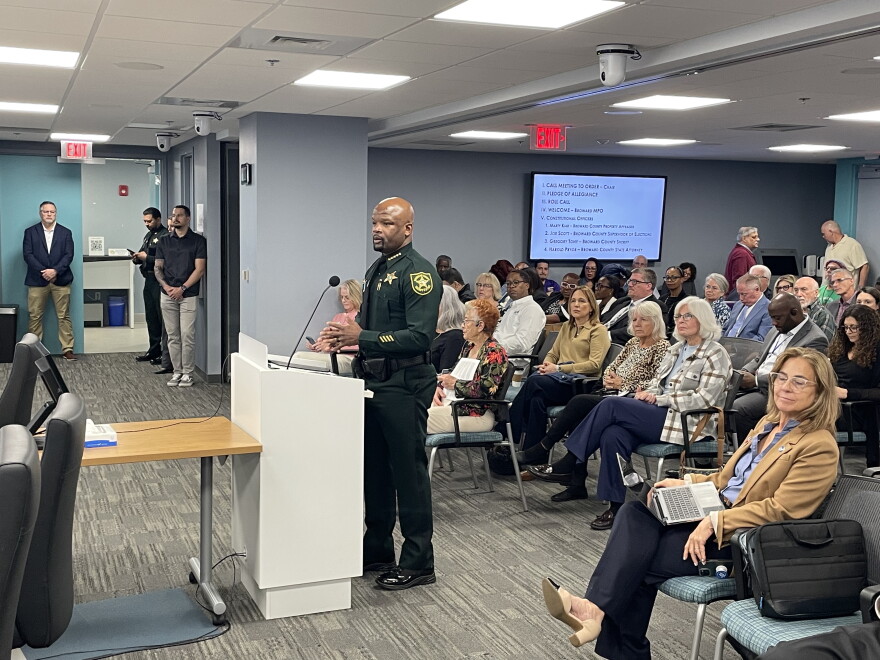
In Broward County, commissioners deferred a $5.8 million supplement requested by the Broward County Sheriff’s Office while exploring whether the county should take over regional 911 call-taking and dispatch. The commission is also advancing proposals that would eliminate or reshape several advisory boards connected to racial equity, women’s issues and representation requirements.
In Miami-Dade, voters will decide a County Commission District 5 runoff and weigh a series of ballot questions involving transportation, public safety infrastructure, waterfront development and property taxes.
The political backdrop also includes the Everglades Trust’s endorsement of gubernatorial candidate Byron Donalds, who has pledged to complete the state’s existing Everglades restoration work plan during a single term.
Here is what residents need to know as the Nov. 3 election approaches.
Broward defers $5.8 million sheriff’s request
The Broward County Commission voted unanimously Oct. 6 to indefinitely defer a $5.8 million budget supplement requested by the Sheriff’s Office.
According to WLRN’s report, the money was intended primarily for dispatch-service salaries and related expenses. County staff told commissioners that the Sheriff’s Office had not provided enough detail to establish how the funds would be used or what would happen if the request were denied.
The vote came amid worsening tensions between Sheriff Gregory Tony and county commissioners. Tony said he was suspending budget discussions with the county while a statewide prosecutor investigation involving county officials continues. Commissioners, meanwhile, have criticized the Sheriff’s Office over transparency, financial reporting and its handling of previous audit recommendations.
The dispute is not simply about one budget transfer. It is also about who should control essential public-safety functions.
Commissioners directed county administration to develop a plan for transferring regional E-911 call-taking and dispatch services from the Sheriff’s Office to the county. The Sheriff’s Office has managed those services since 2014, while the county owns the underlying equipment and infrastructure.
County Administrator Monica Cepero said a future county public-safety department could include both fire rescue and 911 operations. Commissioners emphasized that the proposal is not intended to eliminate dispatcher jobs, though any transfer would require negotiations with employees and unions.
What it means for residents
The immediate effect is uncertainty over how the $5.8 million request will be resolved. The longer-term question is whether Broward will create a new county-run structure for 911 services.
A transfer could give the county more direct control over spending, performance data and accountability. It could also involve transition costs, new administrative arrangements and disputes over which agency is responsible for staffing and operations.
For residents, the central concerns are practical: whether emergency calls will be answered and dispatched quickly, whether service quality will remain consistent, and whether taxpayers will ultimately pay for a new public-safety department.
The commission is expected to receive more information before its Oct. 20 meeting.
Broward moves to dismantle or reshape DEI-related boards
Broward commissioners also voted 6-2 to advance public hearings on two proposed ordinances tied to Florida’s new restrictions on local government diversity, equity and inclusion programs.
The law, signed by Gov. Ron DeSantis, takes effect Jan. 1, 2027. It restricts local government spending on DEI programs and offices and defines prohibited activities involving preferential treatment based on characteristics such as race, sex or sexual orientation.
Under the first proposed ordinance, Broward would repeal the county-code authorizations for the Racial Equity Task Force and the Commission on the Status of Women.
The Racial Equity Task Force was created in 2020 and included volunteer members nominated by community organizations, including the NAACP and the Sheriff’s Office. It held meetings and town halls and issued recommendations on issues such as education, health care and systemic racism.
The Commission on the Status of Women, established in 1976, has focused on issues including women’s economic security, health and education. Its work has included a biennial report produced with Florida International University.
The second ordinance would retain several other bodies but change their representation rules. Proposed revisions affect the Tourist Development Council, the Climate Change Task Force and the Homeless Continuum of Care Board.
Among other changes, the proposed language would remove requirements for certain representation, including an African American member on a tourist council advisory committee, a representative from the Urban League of Broward County on the climate task force and an LGBTQ+ representative on the homeless board.

What it means for representation
The proposals would not directly change a resident’s tax bill. Their effect would be on how county government gathers public input and who is guaranteed a place in advisory processes.
Supporters of the changes say the county must comply with the state law and remove language that could expose Broward to legal or financial penalties. Several commissioners said they would not make the changes voluntarily but believe the state mandate limits their options.
Opponents argue that eliminating the boards or removing specific representation requirements could weaken the county’s ability to track disparities and hear from communities that have historically had less influence over policy.
Public hearings on both ordinances are scheduled for Oct. 20. As of Oct. 8, the proposed changes had not been finalized.
Residents who want to comment should review the Broward County Commission agenda materials and confirm the meeting time, participation rules and agenda status before attending.
Miami-Dade’s District 5 runoff: Lopez versus Piper
Miami-Dade County Commission District 5 will be decided in a Nov. 3 runoff between incumbent Vicki Lopez and Rob Piper.
Lopez led the August nonpartisan primary with approximately 42.3% of the vote. Piper received about 29.5%, while Joe Sanchez received roughly 28.2%. Because no candidate exceeded 50%, Lopez and Piper advanced to the runoff.
The district includes parts of central and eastern Miami-Dade, including neighborhoods around downtown Miami, Brickell, Little Havana, Coconut Grove and nearby areas. The race has focused on affordability, development, public safety, county spending and the role of special interests in local government.
The official Miami-Dade election notice and ballot materials provide the formal election information for voters.
The District 5 result will matter beyond one commission seat. Miami-Dade commissioners will be responsible for decisions involving transit fares, countywide infrastructure, public safety funding and the future of major waterfront assets.
Transit fares will rise in January
Miami-Dade commissioners approved the county’s first standard Metrobus and Metrorail fare increase in more than 13 years.
Beginning in January 2027, the regular fare will increase from $2.25 to $2.75. The county expects the change to generate approximately $9.2 million and help preserve service on 13 routes that otherwise faced cuts.
The restored service includes late-evening or 24-hour service on several major corridors and routes serving areas with limited transportation alternatives. The county estimates the restoration will benefit about 4,200 daily riders and more than 1.3 million annual trips.
The increase does not eliminate free or reduced-fare programs for eligible seniors, veterans, students, people with disabilities and residents with limited incomes. Details are available through Miami-Dade’s transit fare and pass information.
Free Metromover service remains in place for now. Commissioners have directed the administration to develop a plan for potentially charging a fare in the future, reportedly around $1, but a final decision has not taken effect.
What it means for riders
Regular riders will pay 50 cents more per trip starting in January. For commuters who use transit twice a day, five days a week, that represents an increase of about $20 per four-week month before considering passes, discounts or transfers.
The county’s argument is that the additional revenue protects routes that thousands of residents rely on. At the same time, other service reductions remain in the approved budget, including late-night changes and the elimination or modification of some lower-ridership routes.
November ballot questions include safety bonds and Virginia Key
City of Miami voters will also see local ballot questions on Nov. 3.
One measure, the “Safe and Ready Miami” referendum, would authorize up to $450 million in general-obligation bonds for public-safety infrastructure. Proposed uses include rebuilding and modernizing fire stations, addressing deferred maintenance and constructing a public-safety headquarters.
The city says repayment would remain within the existing maximum debt millage rate rather than increasing that limit. Voters should review the full ballot language and city financial documents to understand the repayment schedule and the projects eligible for funding.
Another measure, Miami Referendum 3, concerns a proposed lease of approximately 27 acres on Virginia Key, including the Rickenbacker and Marine Stadium marinas.
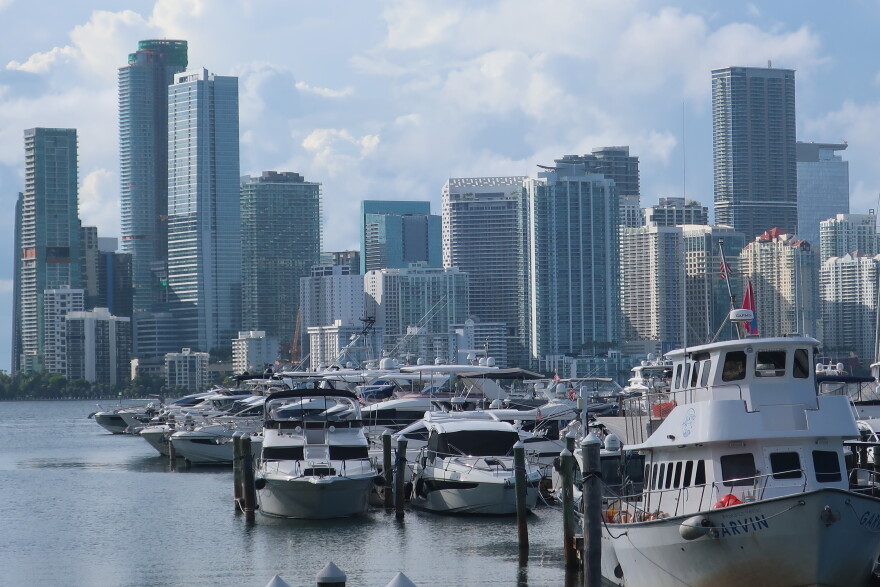
If approved, the agreement would create an initial 45-year lease with two 15-year renewal options, potentially extending the arrangement to 75 years. The proposed operator, Virginia Key LLC, is a partnership between Suntex Marinas and RCI Group.
The agreement calls for a minimum annual rent of about $2.2 million plus 6% of gross revenue. Supporters say the plan would finance approximately $80 million in redevelopment and create a modern waterfront destination. Opponents say the contract was negotiated in 2016 and does not reflect today’s property values or the public value of the waterfront.
The question is on the ballot following litigation that found the city had failed to submit the lease to voters as required. City officials have described the deal as unfavorable, but the city attorney said the court decision left commissioners with no discretion to keep it off the ballot.
For voters, the decision involves more than a marina. It concerns long-term control of public waterfront land, access for boaters and residents, potential environmental impacts on Biscayne Bay and the value of the lease to taxpayers.
Amendment 3 could reshape local tax revenue
Florida Amendment 3 would increase the homestead exemption from $50,000 to $150,000 in the first phase and $250,000 in the following phase, with future inflation adjustments. The amendment requires approval by at least 60% of voters.
Mayor Daniella Levine Cava opposes the measure, while Miami-Dade Sheriff Rosie Cordero-Stutz supports it. The disagreement reflects a larger debate over whether homeowners should receive tax relief even if local governments lose revenue used for public safety, transit, parks, flood control and other services.
Donalds has also endorsed Amendment 3, arguing that property taxes have risen sharply while household and business budgets have not kept pace.
The exact effect would vary by property value, taxing authority and millage rate. Critics warn that the measure could significantly reduce local-government revenue and force officials to cut services or identify replacement funding. Supporters say homeowners need relief from rising housing costs and property-tax burdens.
Miami-Dade Tax Collector Dariel Fernandez has separately committed an additional $20 million from his office to help fund deputy payroll and overtime, subject to approval from the Florida Department of Revenue. That commitment comes as Cordero-Stutz says the Sheriff’s Office needs $42 million more than the adopted allocation, while Levine Cava maintains that the approved budget fully funds the department’s needs and includes 200 new positions.
The Everglades enters the political debate
The Everglades is increasingly tied to Florida’s broader arguments over spending, growth, water management and environmental protection.
The Everglades Trust endorsed Donalds on Oct. 6 after he pledged to complete the existing restoration work plan during one four-year term. He also said he would maintain current spending, monitor Lake Okeechobee discharge schedules and send as much water south as the natural system can absorb.
The pledge comes as construction continues on the Everglades Agricultural Area Reservoir and as officials debate whether the region has enough storage and treatment capacity to protect the River of Grass, Florida Bay and coastal estuaries.
South Florida voters will therefore encounter Everglades-related questions indirectly throughout the campaign: how much public money should be committed to restoration, how should water infrastructure support future development, and who should pay when environmental and public-safety priorities compete?
The answers will begin taking shape through the Nov. 3 results, and through the local budget decisions that follow.
Sources: WLRN on Broward’s sheriff budget dispute, WLRN on Broward’s proposed advisory-board changes, Miami-Dade transit announcement, WLRN on Virginia Key Referendum 3, and the Miami-Dade general-election notice.