South Florida’s housing market is no longer moving in a single direction.
At the top, ultra-luxury developers are reporting record-breaking presales, domestic cash buyers and strong demand for branded waterfront residences. Across much of the resale condo market, however, buyers have more choices, sellers face longer marketing periods and mortgage rates remain near 7%.
The latest contrast is playing out on Brickell Key.
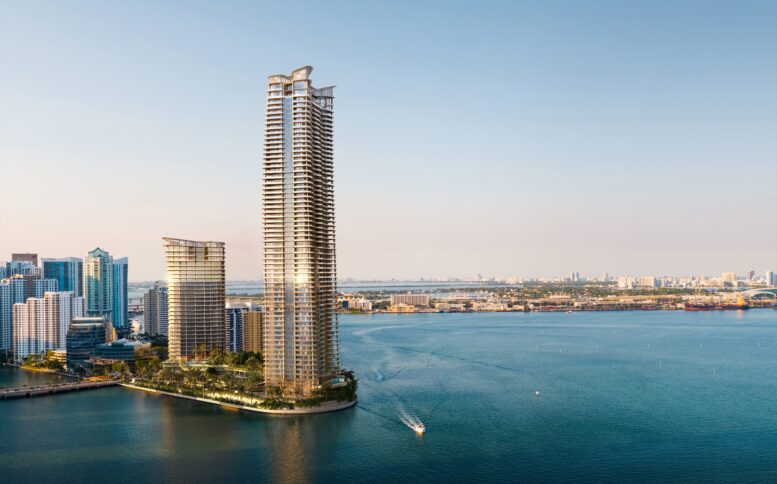
Swire Properties has broken ground on The Residences at Mandarin Oriental, Miami, a two-tower development that has recorded more than $1.7 billion in presales before construction is complete. Roughly 80% of the South Tower has been sold, with completion scheduled for 2030.
The project is currently ranked as South Florida’s leading luxury development on the October 2026 Haute 20 list, ahead of The St. Regis Residences, Miami. Brickell and Bentley Residences Sunny Isles Beach.
That momentum does not mean the entire condo market is booming. It means South Florida real estate has split into two increasingly distinct markets: a cash-heavy, scarcity-driven luxury tier and a more rate-sensitive resale market below it.
Brickell Key is selling a different product
The Mandarin Oriental project is designed to compete not only with other condominiums but also with South Florida’s highest-end single-family homes.
The development will include a 66-story South Tower with 228 residences and a 33-story North Tower with a 121-room Mandarin Oriental hotel, 70 private residences and 28 turnkey Hotel Collection residences. A 100,000-square-foot amenity podium is planned with pools, wellness facilities, dining spaces, lounges and private services.
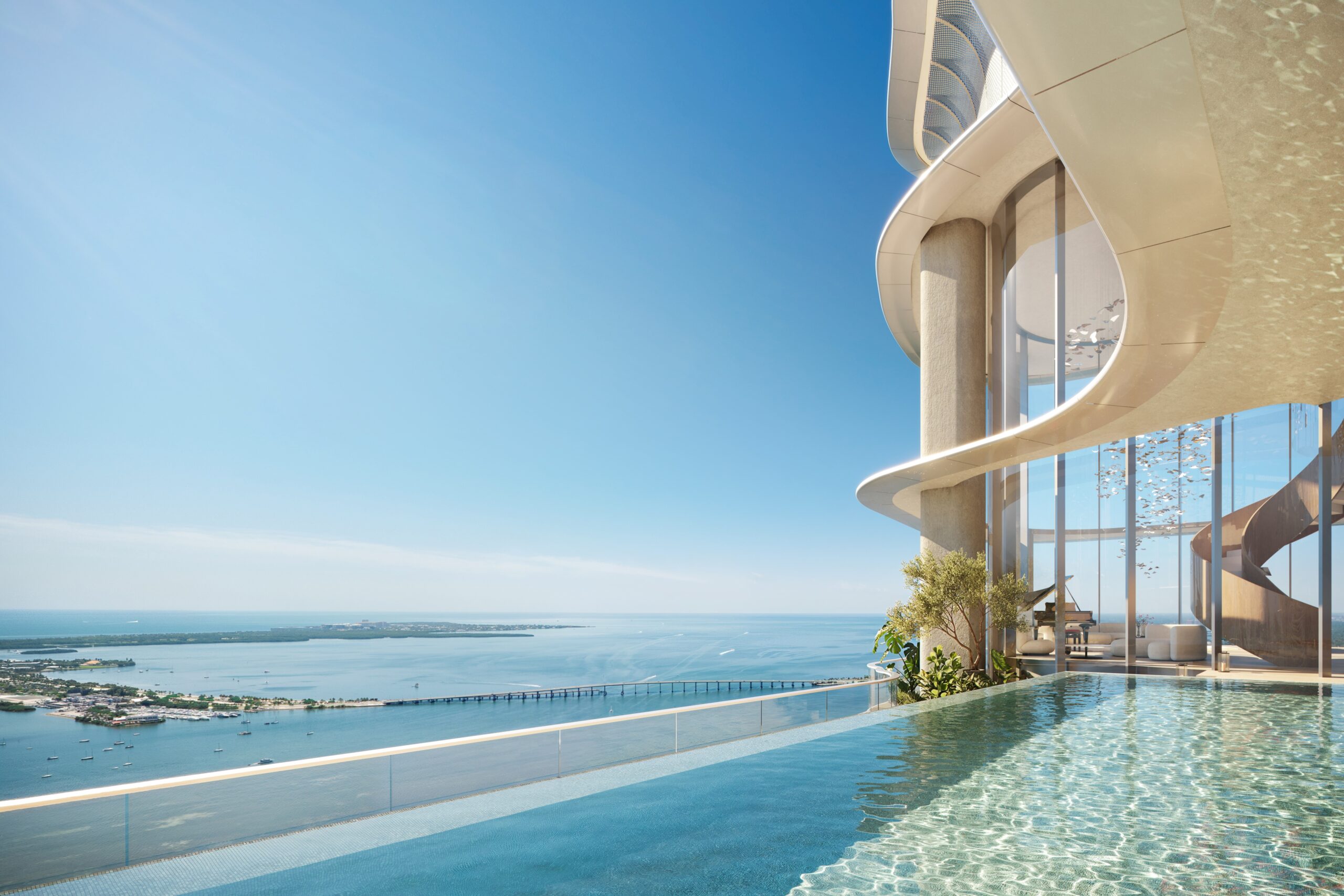
According to Florida YIMBY’s report on the groundbreaking, prices for remaining residences begin at approximately $7 million in the South Tower and $4 million in the North Tower. Two crown penthouses went under contract for $49.9 million each, setting reported mainland Miami condominium records at approximately $6,300 per square foot.
The project’s buyer base also illustrates how Miami’s economic profile has changed. About 65% of purchasers are domestic, including buyers from California, New York and Massachusetts. Many work in finance and technology, sectors that have continued to feed demand for high-end housing in Brickell.
The buyers are not responding to the market in the same way as a household financing a $700,000 or $1 million condo. Many are paying cash. Others are purchasing a second home or a primary residence at a price point where borrowing costs matter less than location, privacy, brand and service.
Swire has said that approximately 30% of buyers plan to use their residences as primary homes, while about 60% intend to use them as second homes. That is a significant distinction from the conventional owner-occupant market, where monthly payment calculations often determine whether a buyer can proceed.
The project also benefits from Brickell’s office and employment expansion. New headquarters and office towers from major financial firms are reinforcing the neighborhood’s position as an economic center, not simply a residential district. South Florida Digest previously reported on the regional office market’s strong third-quarter leasing demand, another factor supporting long-term demand for well-located housing.
Casa Bella shows that branded demand extends beyond Brickell
The same pattern can be seen in Downtown Miami, where Casa Bella Residences by B&B Italia has been completed at 1400 Biscayne Boulevard.
The 56-story tower contains 319 residences, including 10 penthouses. More than 90% of the homes were under contract as of the October 7 announcement, with closings underway and the first residents already moved in.

The building was developed by Related Group and Alta Developers, designed by Arquitectonica and styled by Piero Lissoni of Lissoni New York. Its location near the Pérez Art Museum Miami, Frost Science, Kaseya Center and the Adrienne Arsht Center adds a lifestyle component that is increasingly important to luxury buyers.
Casa Bella is not identical to the Mandarin Oriental project. One is a future waterfront enclave on Brickell Key; the other is a completed Downtown Miami tower in an urban arts and entertainment district. But both are selling more than square footage.
They are selling a finished identity: recognized design, hospitality-style services, amenity packages and a sense that the residence will remain differentiated from ordinary inventory.

That differentiation helps explain why high-end buyers can remain active even while broader condo transactions are slower. In a market with substantial inventory, buyers still compete for properties that are scarce, newly delivered, well managed or attached to a powerful brand.
What the split means for a mid-market condo seller
For owners of a conventional resale condo, the current market requires a different strategy.
The regional outlook is not forecasting a collapse. MIAMI REALTORS® and RWorld project condominium and townhome prices to rise approximately 2.5% in 2026 and 4.5% in 2027. Inventory is also expected to improve gradually, with projected year-end supply declining from about 10.9 months in 2025 to 9.0 months in 2026 and 8.2 months in 2027.
But those figures still describe a buyer-friendly environment, particularly in Miami-Dade and Broward. A seller cannot assume that rising regional prices will lift every building equally.
A mid-market condo may face competition from:
- Newer buildings offering better amenities and warranties
- Developers offering financing incentives or closing-cost assistance
- Resale units that have been sitting on the market for months
- Buyers who are cautious about association fees, assessments and insurance
- Cash buyers who can negotiate aggressively because they are not dependent on financing
For sellers, the building itself matters as much as the unit. Buyers and their lenders are examining reserve studies, milestone inspection reports, association financial statements, insurance coverage, meeting minutes and pending assessments.
A unit with dated interiors can still sell if the building is financially sound and priced correctly. A renovated unit in a building with rising insurance costs, weak reserves or unresolved structural questions may face a much harder conversation.
The central issue is not simply whether a condo is listed below last year’s price. It is whether the buyer can confidently estimate the total cost of ownership.
Why 7% mortgage rates are creating two markets
Mortgage rates near 7% continue to pressure entry-level and mid-market buyers. A higher rate increases the monthly payment, reduces purchasing power and makes association dues and insurance costs more consequential.
That pressure is especially visible in older coastal buildings, where owners may already be absorbing higher premiums, special assessments or reserve contributions. Even when the list price appears reasonable, the full monthly cost can push a property beyond a buyer’s budget.
At the luxury end, the equation changes. A buyer paying cash has no mortgage-rate exposure. A buyer purchasing a $10 million residence may also view the home as a long-term asset, a second residence or a base near a growing business district rather than as a conventional affordability decision.
This does not make luxury real estate immune to market conditions. High-end inventory remains elevated in parts of South Florida, and luxury buyers can negotiate when several comparable properties are available. But the segment is less directly tied to the Federal Reserve’s rate cycle than the financed resale market.
That is why a $1.7 billion presale total on Brickell Key can coexist with slower activity elsewhere.
Insurance, climate risk and the Everglades factor
The bifurcation is also being shaped by risk beyond interest rates.
In coastal South Florida, insurance availability and pricing are now central real estate considerations. Buyers are asking how buildings are engineered, how associations are funded and whether future climate-related costs could affect ownership.
The Everglades is part of that broader resilience conversation. The region’s water-management system, drainage infrastructure and exposure to extreme weather influence how South Florida communities think about long-term development. Projects near the coast must account for flooding, storm surge, sea-level rise and the rising cost of protecting buildings and residents.
That does not mean every property near the Everglades or the coast carries the same level of risk. It does mean that resilience is becoming a pricing factor alongside views, amenities and proximity to employment centers. South Florida’s Everglades reservoir construction milestone is part of the region’s continuing debate over water security and infrastructure capacity.
For buyers, insurance and resilience should be evaluated at the building level. For sellers, clear documentation can help reduce uncertainty and protect value.
What to watch in the fourth quarter
The final months of 2026 should reveal whether the market’s two-speed structure becomes even more pronounced.
Three indicators deserve close attention:
-
Luxury presales and cash participation: If domestic finance and technology buyers continue purchasing at the top, branded waterfront projects may remain the strongest source of momentum.
-
Resale inventory and price reductions: The number of older condos receiving reductions will show how much leverage remains with buyers outside the luxury tier.
-
Association costs and insurance renewals: New premiums, assessments and reserve requirements could influence pricing more than headline market forecasts.
South Florida’s real estate market is not moving as one. The Mandarin Oriental’s presales demonstrate that global-caliber, branded housing can attract billions in commitments before delivery. Casa Bella shows that completed, design-focused projects can also gain traction in Downtown Miami.
Meanwhile, the typical condo seller still faces a market where buyers compare carefully, financing is expensive and building quality matters.
For Q4, the most accurate description is not boom or bust. It is separation. At the top, cash-rich buyers are competing for scarce, highly differentiated homes. In the middle, buyers are weighing monthly costs, insurance, reserves and resale risk.
That divide is likely to remain one of the defining features of South Florida real estate through 2027.