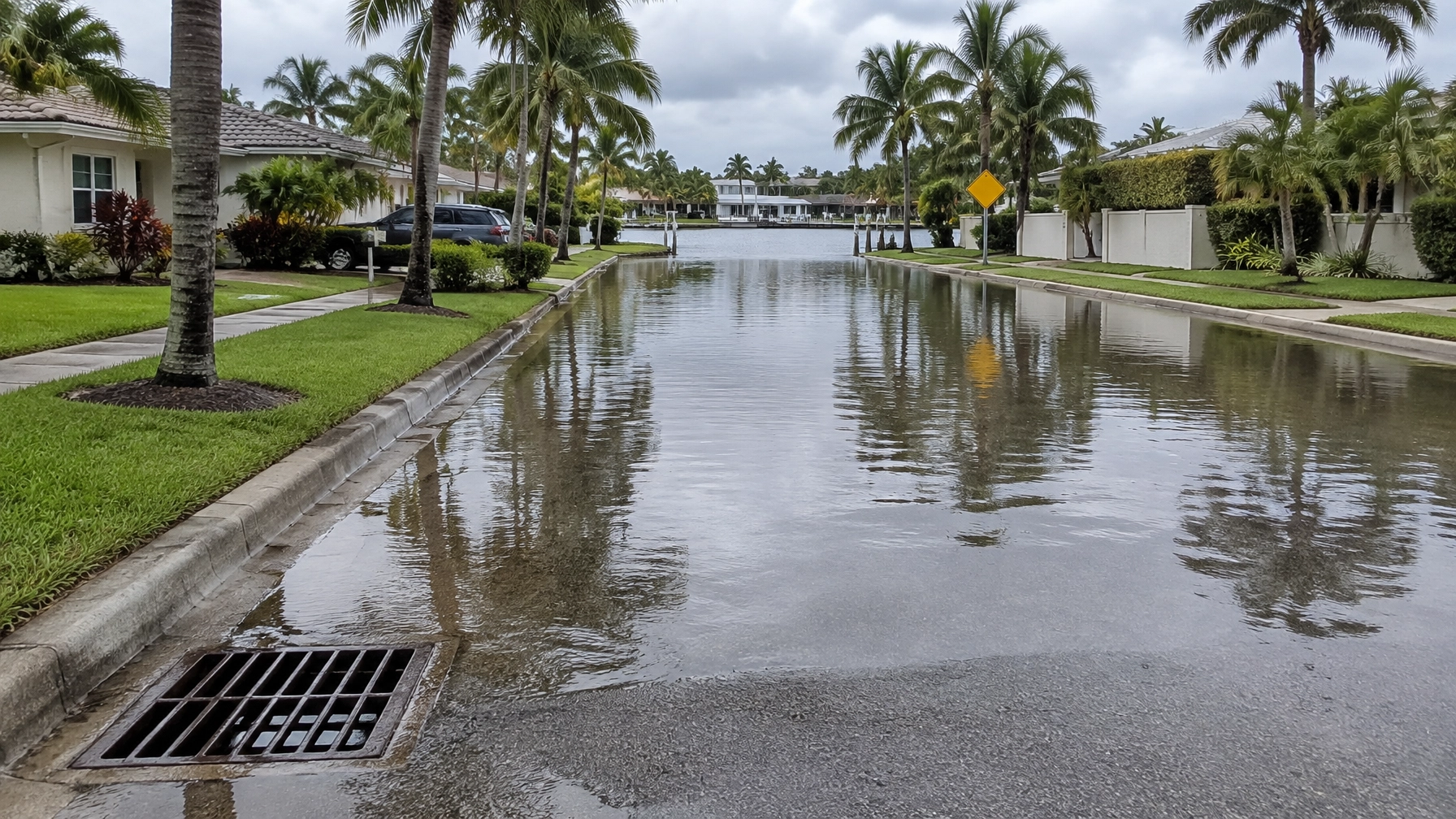
Illustrative image; not a photograph of Friday’s sewage overflows.
Fort Lauderdale’s sewer troubles spilled into streets and waterways Friday, as raw sewage oozed from manholes while the city’s system struggled to recover from weeks of flooding. That same day, city commissioners approved a two-year, $62.875 million contract for sewer inspections and repairs. Work aimed at finding and reducing problems that can leave pipes overwhelmed during heavy rain. The approval is a long-term measure, not an immediate fix for the ongoing overflows, according to WSVN’s report and the official commission record.
Sewage reached storm drains and canals
WSVN reported that recent king tides and record rainfall over the past week overwhelmed the citywide sewer system. Faulty pump stations also hampered the response, with tanker trucks hauling sewage between neighborhoods throughout Friday, according to the station.
The consequences were visible near local waterways. WSVN reported that the city posted multiple sewage-spill warning signs from the Landings in Coral Ridge to south of Las Olas. One resident, identified by the station as Paul, said, “Flow is over to the stormwater drains, and that of course goes into the canals. And now I see that the city’s posted warning signs.” Another resident described a manhole as “percolating like a bubbler in a school.”

Illustrative image of sewer response operations; not a photograph of the city’s Friday response.
The city’s immediate advice, as relayed by WSVN, was to avoid nearby waterways until continued testing showed bacterial levels had fallen and officials gave the all-clear. WSVN also reported that no boil-water advisory was in effect and tap water remained safe to drink. Those updates address separate risks: the reported warning concerned nearby waterways, not the city’s drinking water.
A restaurant adapts as restrooms fail
The system problems also affected businesses. WSVN reported that Anthony’s Clam House closed its dining room because its restrooms were not fully functioning. Manager Hector Cordova told the station, “It’s just difficult… We’re just trying to hold on tight. It’s not sanitary to be operating with a bathroom or restrooms that are not fully functioning for our customers.”
The restaurant pivoted to a $5.95 chicken parmesan special. Cordova told WSVN that between 2 p.m. and 9 p.m. it sold more than 700 chicken parm plates, with customers also ordering other menu items and supporting staff.
The contrast is stark: while a neighborhood restaurant looked for a way to keep serving customers, its management said it could not safely operate its dining room without functioning restrooms. The incident shows how a sewer failure can reach beyond streets and canals and disrupt day-to-day business, as WSVN’s reporting from Anthony’s illustrates.
What the $62.875 million contract covers
At its Nov. 6 meeting, the Fort Lauderdale City Commission approved agreements under Invitation to Bid 598-7 for a citywide contract covering closed-circuit television (CCTV) sewer inspections and inflow-and-infiltration repairs. The official Legistar record lists the initial two-year aggregate value as $62,875,000, covering all four commission districts.
The work targets vulnerabilities that can let excess water enter sanitary sewers. The city’s Inflow & Infiltration program explains that stormwater can get into pipes through faulty manhole covers, yard drains, roof-drain connections and cross-connections. Groundwater can seep through cracks, leaky joints and deteriorated manholes.

The City of Fort Lauderdale’s diagram of inflow and infiltration.
The city says inflow can more than triple wastewater volumes during major storms. Because sewer pipes have fixed capacity, the added water can exceed what the system can carry, resulting in overflows into nearby waterways, according to the city’s explanation of why inflow and infiltration matter.
That mechanism helps explain why the commission’s contract is relevant to Friday’s incident, but it does not establish that a particular defect caused any specific overflow. The contract funds inspection and repairs across the system; it is not an assurance that all vulnerabilities will be addressed before the next major rain event. The official record specifies the contract’s initial term and total value, while the city’s program describes how CCTV inspections can identify pipe conditions and where water may be entering.
What residents should know now
The city told WSVN it was hopeful conditions would return to normal by Monday, Nov. 9. That was a target, not a confirmed reopening date: the city said continued testing would determine when bacterial levels had fallen enough for all-clears at affected waterways, according to WSVN’s Friday report.
For residents, the distinction between a visible warning sign and an all-clear matters. Until city officials lift relevant warnings, follow the advice to avoid nearby waterways. WSVN reported that the city had posted signs at multiple locations, but the report did not establish that every waterway in Fort Lauderdale was affected equally.
The city’s Waterway Quality Dashboard is an official resource for checking waterway information. For sewer-program questions, the city lists an Inflow and Infiltration Program hotline at 877-332-4037 and a Customer Support Center at 954-828-8000 on its program page. These contact details are not a substitute for current spill notices or site-specific instructions from the city.
The wider Everglades water picture
The Fort Lauderdale overflows unfolded amid a wider regional flooding event, but the available sources do not establish that Lake Okeechobee or Everglades operations caused the city’s sewer failures. The U.S. Army Corps of Engineers recorded Lake Okeechobee at 14.07 feet on Friday, Nov. 6, in LOSOM Zone D; the lake was at 13.95 feet the previous day, according to the Corps’ preliminary daily report. In its Nov. 3–9 operations position statement, the South Florida Water Management District described the lake as being in Zone D and recommended zero flow targets to the St. Lucie Estuary and Lake Worth Lagoon, while planning around basin runoff for the Caloosahatchee (SFWMD statement). Separately, Okeechobee County was added to the governor’s flood emergency on Nov. 4 after heavy rain, and the county sought state recovery help, as reported by CBS12, the Okeechobee Voice and WGCU. Together, those reports describe a broader water-management and recovery challenge across South Florida and the Everglades region, distinct from the documented local causes of Fort Lauderdale’s sewer overflows.
The immediate test for Fort Lauderdale is whether the system can stabilize and waterway testing supports the promised all-clears. The longer-term test is whether inspections and repairs under the new contract reduce the sewer system’s vulnerability to stormwater and groundwater entering during future downpours, a risk the city describes in its inflow-and-infiltration program.