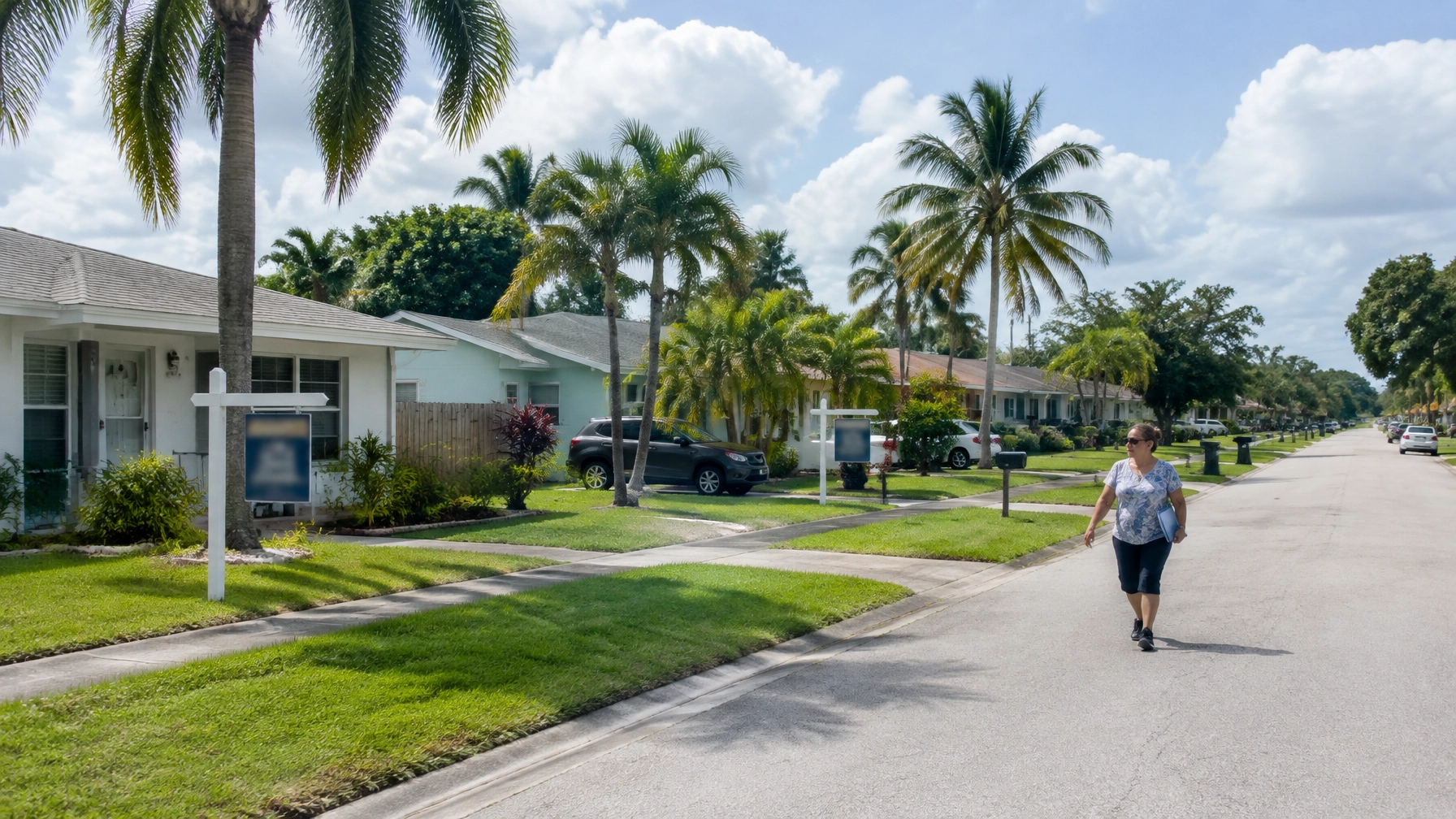
The story that Wall Street is buying up the neighborhood misses a more complicated picture. At a median price near $635,000, South Florida houses can be difficult to make work as rentals for national investors focused on income. Meanwhile, local and regional operators remain active, and a shortage of new construction limits the choices available to buyers and renters alike.
The math behind the $635,000 hurdle
A home’s price is only half the equation for a rental investor. The other half is what the property can reliably bring in after expenses.
At roughly $635,000, a single-family home needs substantial rent to deliver an attractive return. The rent-to-price math gets harder once an owner accounts for property taxes, insurance, repairs, vacancy, management and financing. Higher interest rates increase the monthly cost of borrowing, while the expenses of maintaining a home in South Florida can weigh on the income left over.
That is the central point behind the $635,000 “wall”: not that large investors cannot buy here, but that many houses at this price do not fit the yield targets national institutions use to evaluate rental properties. Those firms often need investments that can produce predictable returns across a large portfolio. When a home’s income looks thin relative to its purchase price and operating costs, the numbers may not justify a bid.
According to Florida Times’ report on investment and limited housing supply, institutional capital that remains active in the region is largely Florida-resident capital. That distinction matters. “Investor” can mean a national company, a Florida-based operator, or an individual landlord. It does not automatically mean a Wall Street firm.
Nor does ownership through a corporation or LLC prove that a home belongs to a national institution. Local owners and smaller businesses also use those structures. Treating all investor purchases as evidence of a national takeover can obscure who is actually buying, and why.
A market with fewer easy choices
Even as some national firms retreat, the supply of single-family homes remains tight across much of South Florida. The latest county figures available from PBP Real Estate’s months-of-inventory data put single-family supply at about 3.9 months in Martin County, 4.0 in Palm Beach County, 4.5 in Broward County, 5.0 in St. Lucie County and 5.6 in Miami-Dade County.
Months of inventory estimates how long current listings would take to sell at the previous month’s pace, assuming no new listings came on the market. It is a market measure, not a prediction, and it can vary considerably from one neighborhood to another. Still, those county figures show why the single-family market can feel constrained: buyers have some options, but the region is not awash in houses.
That shortage matters to both homeowners and renters. A buyer looking for a modest house may compete with families, individual landlords and local operators. A renter who wants a single-family home has limited options if owners keep properties rather than sell, or if new rental homes are slow to arrive.
Meanwhile, the inventory picture differs sharply by property type. In the same PBP data, condos and townhouses carry considerably more supply than houses in several counties, including Miami-Dade and Broward. More listings in one category do not solve the shortage in another: a condo is not necessarily a substitute for a house with a yard, and the two markets can face different costs and buyer needs.

Who is gaining ground as national firms sell?
Large national institutional firms have been divesting single-family holdings for several years, often selling to smaller or regional operators. One recent example illustrates how varied the market can be: The Real Deal reported that 13th Floor Homes sold its Delray Beach rentals for about $29 million.
The transaction involved Solera at Avalon Trails, a 74-home rental community made up of attached villas, not a scattered portfolio of individual houses purchased one at a time. The seller, 13th Floor Homes, is a South Florida developer; the buyer, Robbins Property Associates, is based in Tampa. The sale is an example of a regional operator acquiring a purpose-built rental community, not proof that national firms are sweeping up neighborhood homes.
That difference helps explain why local and regional players can keep finding opportunities when national buyers step back. They may know particular communities, have established local operations or be willing to pursue properties that do not suit a large national portfolio. Some invest directly; others develop rental communities designed around a specific group of residents.
But the picture is not a simple handoff from national firms to small landlords. The market includes a mix of buyers and investment strategies. What the available examples do suggest is that ownership and investment activity are more varied than the phrase “Wall Street is buying up the neighborhood” implies.
New construction can’t quickly fill the gap
When existing-home supply is tight, more construction might seem like the straightforward answer. In practice, bringing a project from plans to completed homes takes time, and South Florida builders are facing a difficult set of conditions.
The Real Deal’s October 11 report on why it is difficult to build right now points to high interest rates, labor shortages and permitting delays. Each can slow a project or add uncertainty before a builder can begin work. Construction costs also affect how many homes can be delivered at a price buyers or renters can afford.
The consequence is not just fewer new listings this month. A project delayed in planning or construction cannot add completed homes to the market when people need them now. If supply stays limited, the existing housing stock has to carry more of the demand, and buyers and renters have fewer alternatives when a home is out of reach.

The Everglades is part of the housing conversation
There is also a physical limit to where South Florida can expand. Land-use decisions near the region’s western edge affect more than homebuilding: they touch wetlands, water management, flood risk and the long-term protection of the Everglades.
That does not mean every proposed home near the edge of development is built on protected land, or that the Everglades is simply a barrier to growth. It means that expansion has real consequences and must be considered alongside housing needs. Infrastructure, drainage and environmental protections all matter when communities grow close to sensitive ecosystems.
South Florida Digest has previously covered an Everglades reservoir construction milestone and questions about whether it will be sufficient. The housing market and restoration efforts are different stories, but they meet in the same regional conversation about water, land and the trade-offs involved in growth.

What this means for buyers and renters
For buyers, low single-family inventory and elevated prices mean that the number of competing bidders may depend on the neighborhood, price range and condition of a home. A county-level supply figure can provide context, but it cannot tell a buyer whether one specific property is fairly priced, or how much competition it will face.
For renters, a retreat by large national buyers does not automatically create more affordable homes. If there are fewer rental houses available and new construction is slow, supply remains a constraint regardless of who owns the properties. Regional landlords may acquire existing rentals or create new communities, but those investments do not instantly add homes to the market.
The $635,000 figure, then, is not a magic cutoff. It is a shorthand for a tougher calculation: whether rent can support a home’s price and costs. For many national yield-focused investors, the answer may be no. For local or regional operators with a different strategy, it may still be yes.
The larger lesson is that South Florida’s housing squeeze is not captured by a single villain or a single number. National firms are not the only investors in the market, and their pullback does not remove the region’s shortage of houses. Tight supply, difficult construction conditions and the limits of where development can responsibly go all shape what buyers and renters see. And as the Everglades’ western edge remains part of the growth debate, adding homes will require choices about not only how many to build, but where and at what cost.