UF/IFAS photo by Alex Romer
A Burmese python removed is a win for the Everglades. A new study argues, though, that not every removal has the same effect on the population.
Researchers with the University of Florida Institute of Food and Agricultural Sciences (UF/IFAS) have developed a tool that weighs the likely ecological impact of each snake based on traits such as size, sex, survival and reproductive potential. The approach could change how managers assess python-removal efforts: not just by asking how many snakes were caught, but by considering which snakes were removed.
The peer-reviewed study, published in Ecological Applications, introduces the Weighted Removal Index (WRI). Its lead author, Alex Romer, is a quantitative ecologist with the Croc Docs Wildlife Research Team at UF/IFAS’s Fort Lauderdale Research and Education Center in Davie. Co-authors are Melissa Miller, assistant professor of invasive wildlife ecology, and wildlife research scientist Sergio Balaguera-Reina, both at the center.
A count that treats snakes as equals
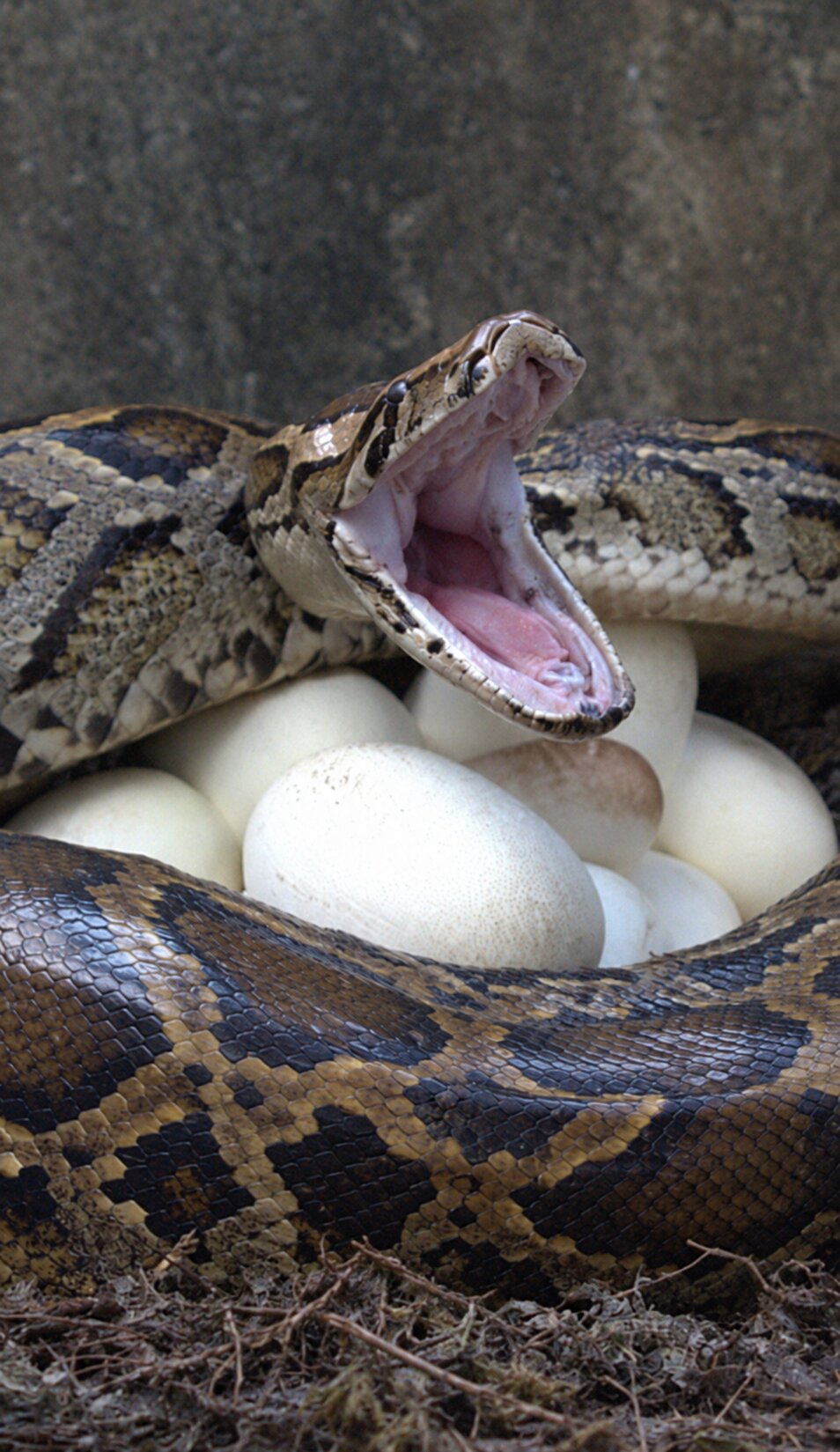
Removal totals are straightforward: each captured python adds one to the count. But pythons at different life stages do not have equal odds of surviving or contributing to future generations. Young snakes die at high rates, while mature animals are more likely to survive. Large females can produce dozens of eggs in a clutch, and reproductive output rises with female size. Females reach sexual maturity at roughly 260 centimeters in snout-vent length, the measurement from the tip of the snout to the cloaca.
“Our previous work treated all Burmese pythons as contributing equally to the population, but removing the biggest female we've ever caught is very different from removing a tiny snake that might not survive next year,” Romer said in the UF/IFAS account of the study.
The WRI gives removals different weights to reflect that difference. Romer offered a simplified example: “The idea is that a big female might be worth 100 arbitrary ecological points, while a little snake might be worth five. That tells you how many little snakes you would need to catch before you've had the same potential impact as removing a large female.”
Those points are not a literal count of animals or a guarantee of population decline. They provide a way to compare the estimated value of removals that a raw tally treats as identical.

UF/IFAS photo by Alex Romer
“Every Burmese python removed is a win for the Everglades, but targeting large reproductive females is likely to reduce the population most effectively,” Miller said. She added that the approach could be especially valuable at new invasion sites and along the invasion front, where focused removals may have greater impact.
Winter counts look small. The potential impact may not.
The study’s most counterintuitive finding concerns timing. By capture totals alone, January and February look less important: contractors catch fewer snakes than during busier periods. But when researchers applied demographic weights, those months became more significant because the removals included a higher proportion of mature males and females.
“If you just count how many pythons contractors catch in a month, January and February don't seem that important because you're catching a relatively small number of snakes,” Romer said. “But when you add in the demographic weighting, suddenly those months look a lot more important.”
That does not mean winter removals automatically outperform every other period. It means a lower number of captures can still represent a meaningful share of the potential population impact if the snakes removed are more likely to survive or reproduce.

UF/IFAS photo by James Whelpley
Machine learning adds a timing tool
The researchers used records from the South Florida Water Management District’s Python Elimination Program and tested three machine-learning models. Their goal was to predict both when contractors were more likely to find pythons and when removals were likely to carry greater demographic value.
One model performed best. Its findings linked higher-value removals to warmer, more humid weather and certain phases of the moon. The model does not make pythons easy to find; the species remains difficult to detect. Instead, the analysis offers managers a way to consider conditions associated with better opportunities to remove snakes with greater potential influence on population growth.
The WRI could also inform how contracted removal programs evaluate results. These programs measure success partly by the number of snakes captured. The researchers propose that assessing removals through demographic weighting could eventually help managers structure effort and incentives around the animals most likely to affect population growth. That is a potential application, not an adopted policy change.
A separate effort: tracking “scout” pythons
In a separate, ongoing research effort, the U.S. Geological Survey is testing small uncrewed aircraft to help track radio-tagged “scout” pythons in the Greater Everglades. The aim is to make surveys faster and safer in terrain that can be difficult to cover on foot. The work is research in progress, not a deployed python-control program. The USGS describes it in its overview of invasive Burmese python research.
Together, these efforts point to a broader shift in Everglades python management: pairing field removal with better information about where and when surveys may be effective, and how much each removal might matter. The study does not suggest that smaller snakes should be ignored. It shows why counting every python as an equal unit can miss the difference between removing a snake that is unlikely to survive and one with greater odds of reproducing.
Study: Romer and colleagues, “Prioritizing removals of a highly cryptic invasive species using machine learning and demographic weighting,” Ecological Applications.