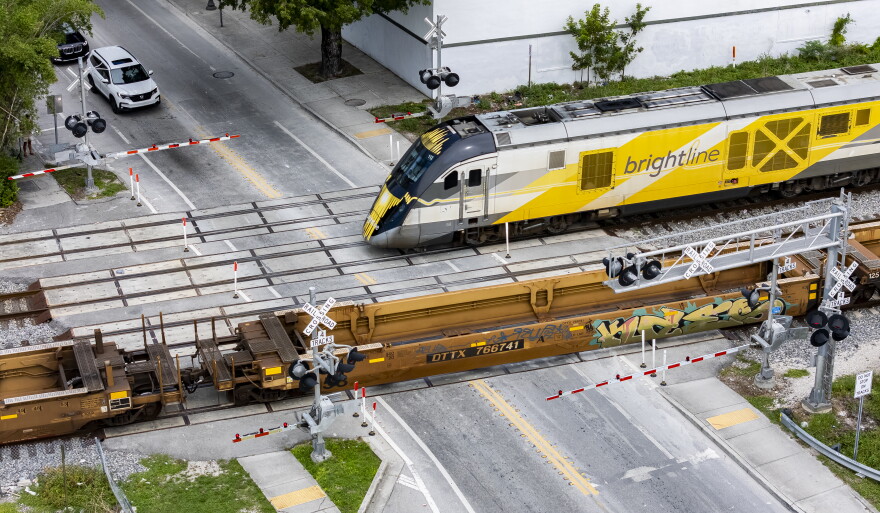
Miami-Dade Mayor Daniella Levine Cava said Thursday, Oct. 22, that she will not sign the county’s proposed commuter rail agreement with Brightline in its current form, saying it does not adequately protect taxpayers. The decision puts a brake on negotiations over Coastal Link, formally known as the Northeast Corridor project, after years of planning and significant public funding approvals.
The mayor said the agreement “does not meet that standard” of taxpayer protection. Her office said costs, access rights and protections remain uncertain, and the county could face too much exposure to cost overruns. Levine Cava has not signed the agreement, and her office wants its terms reworked, the Miami Herald reported. No County Commission vote is scheduled.
The refusal is not a rejection of commuter rail itself. It is a decision not to advance the proposed contract as written. The distinction matters: the agreement remains a draft, not a binding deal, and its financial terms may change through negotiations.
What the proposed deal would cover
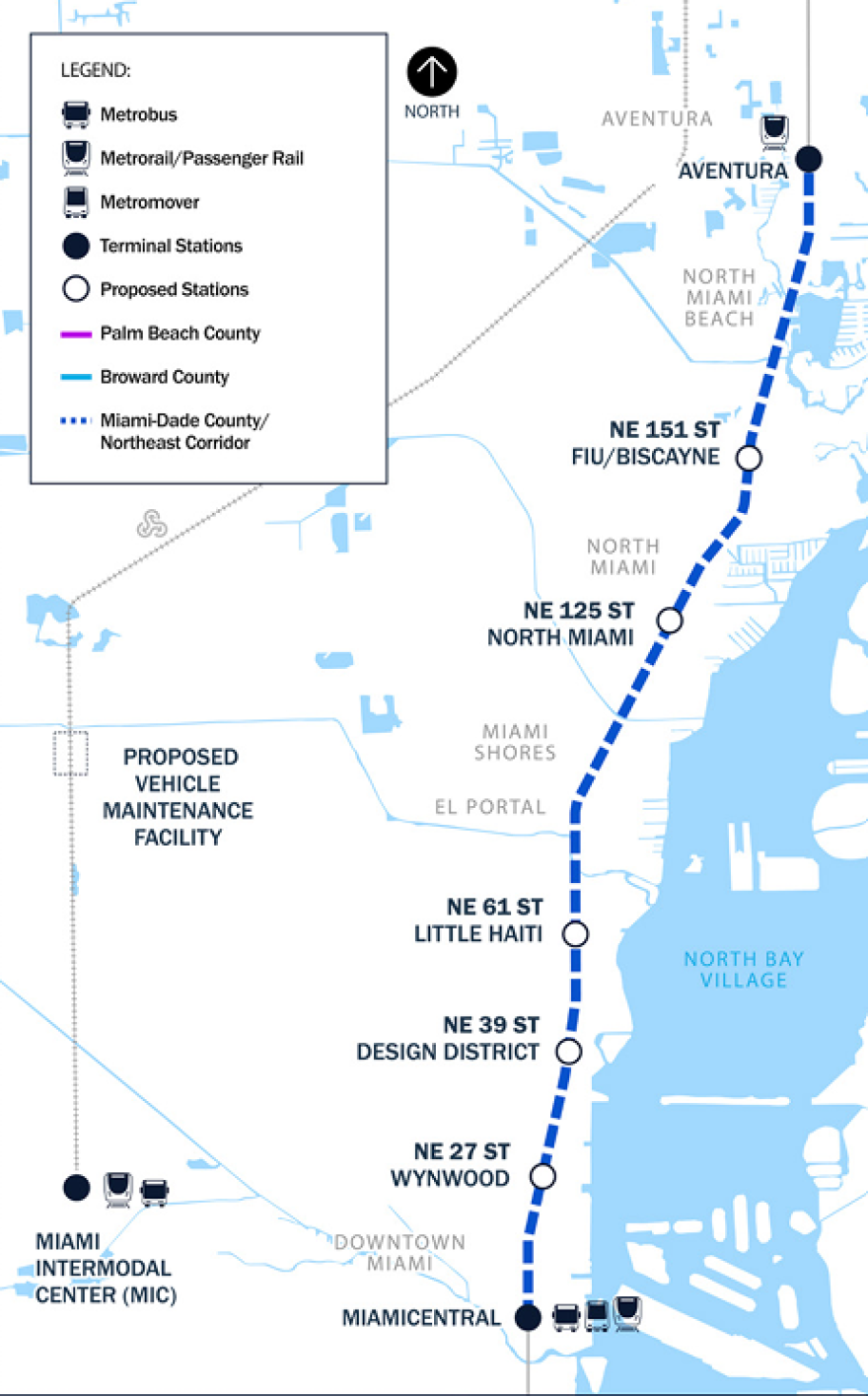
The county’s 13.5-mile Northeast Corridor project would use tracks shared by Florida East Coast Railway, Brightline and Tri-Rail. The service plan calls for existing MiamiCentral and West Aventura stations, plus five new stops in Wynwood, the Design District, Little Haiti, North Miami and FIU North Campus.
A county transportation report estimates the project at more than $900 million, with an anticipated federal contribution of about $390 million through the Federal Transit Administration’s Capital Investment Grants program. The project has received federal approval to enter the Engineering phase, but important financial and track-access issues remain unresolved.
The 149-page draft agreement, dated May 31, outlines a county-funded service operated and maintained by Brightline. It estimates annual operating and maintenance costs at about $33.9 million. A 2024 Brightline investor memo cited by WLRN described $330 million in county milestone payments through the start of service. The draft also says the county would owe Brightline at least $250 million if it terminated the contract “for convenience.”
Those figures describe proposed terms, not payments the county is currently required to make under a signed agreement. Under the draft, Brightline would also manage construction and have a role in choosing contractors. The terms around access to tracks owned by Florida East Coast Railway (FECR) are especially consequential: the county’s transportation report says continuing legal and dispute-resolution proceedings between FECR and Brightline create uncertainty over track access and shared-use arrangements.
The county’s Oct. 6 transportation report also documents broader funding pressures. The state withdrew $200 million previously programmed for the corridor after effectively defunding its New Starts Transit Program. Across the remaining SMART Plan corridors, the county estimates a $7.6 billion funding gap through fiscal 2045. The report also projects a $120 million structural deficit in the Transit Operating Fund beginning in fiscal 2027.
Public funding already approved
The project’s funding history predates the proposed Brightline contract. Miami-Dade approved $72 million in 2019 for an Aventura station and nearly $200 million in 2023 for commuter rail. The Federal Transit Administration pledged up to $389.5 million in 2024.
These approvals do not mean the full amounts have been spent or that every grant dollar is currently available. Nor does the mayor’s decision to withhold her signature, by itself, establish that previously approved funds have been cancelled. The county’s report specifically says the previously programmed $200 million in state funding was withdrawn. The status and future use of other commitments would depend on project agreements, funding conditions and subsequent county action.

Brightline’s bankruptcy adds a financial backdrop
On Sept. 24, 17 Brightline Florida parent companies filed for Chapter 11 bankruptcy protection as part of a restructuring involving about $2.5 billion in holding-company debt. Brightline’s operating railroad did not file, and the company has said service is unaffected, according to Mass Transit.
The filing is not proof that the proposed county service cannot proceed. It does, however, make the financial position of the contracting parties and their affiliates relevant as Miami-Dade weighs a long-term agreement. The Navarro Report reported that Brightline carried 3.1 million passengers in 2025, compared with a projection of about 6.6 million. Ticket revenue was $173.2 million against a projection of $485 million, and the company reported a $127 million operating loss. The report also cited an auditor’s going-concern warning and $985 million in commuter bonds issued through the Florida Development Finance Corporation.
Brightline’s stakeholders have committed $490 million in new long-term capital as part of the restructuring, Mass Transit reported. The chapter filing involved parent companies, not the operating railroad. The county’s latest report separately identifies the FECR dispute as a risk to resolving track access.
Brightline did not immediately respond to the Herald’s request for comment on Levine Cava’s position, according to the newspaper. No new company statement on the mayor’s refusal was available in the reporting reviewed for this article.

What happens next
There is no County Commission vote scheduled. The mayor’s office is seeking revised terms; if a revised agreement moves forward, it would still have to pass through the county’s legislative review and approval process, including action by the commission.
The county’s Oct. 6 report describes the Northeast Corridor as the next SMART corridor positioned for implementation because it is furthest along. That path is contingent, the report says, on mitigating key risks, including the funding gap and uncertainty over FECR track access.
For now, the proposed arrangement remains unsigned. The next steps are negotiation, clarification of the county’s financial and operational protections, and a decision on whether revised terms should be presented to commissioners.
Sources
- Miami Herald: Levine Cava questions Brightline Coastal Link agreement
- Miami-Dade Department of Transportation and Public Works, Legislative Item 260965
- WLRN: Draft agreement and proposed terms
- Mass Transit: Brightline parent companies’ Chapter 11 filing
- The Navarro Report: Brightline bankruptcy and Miami-Dade’s draft contract
- WLRN: June reporting on the proposed deal