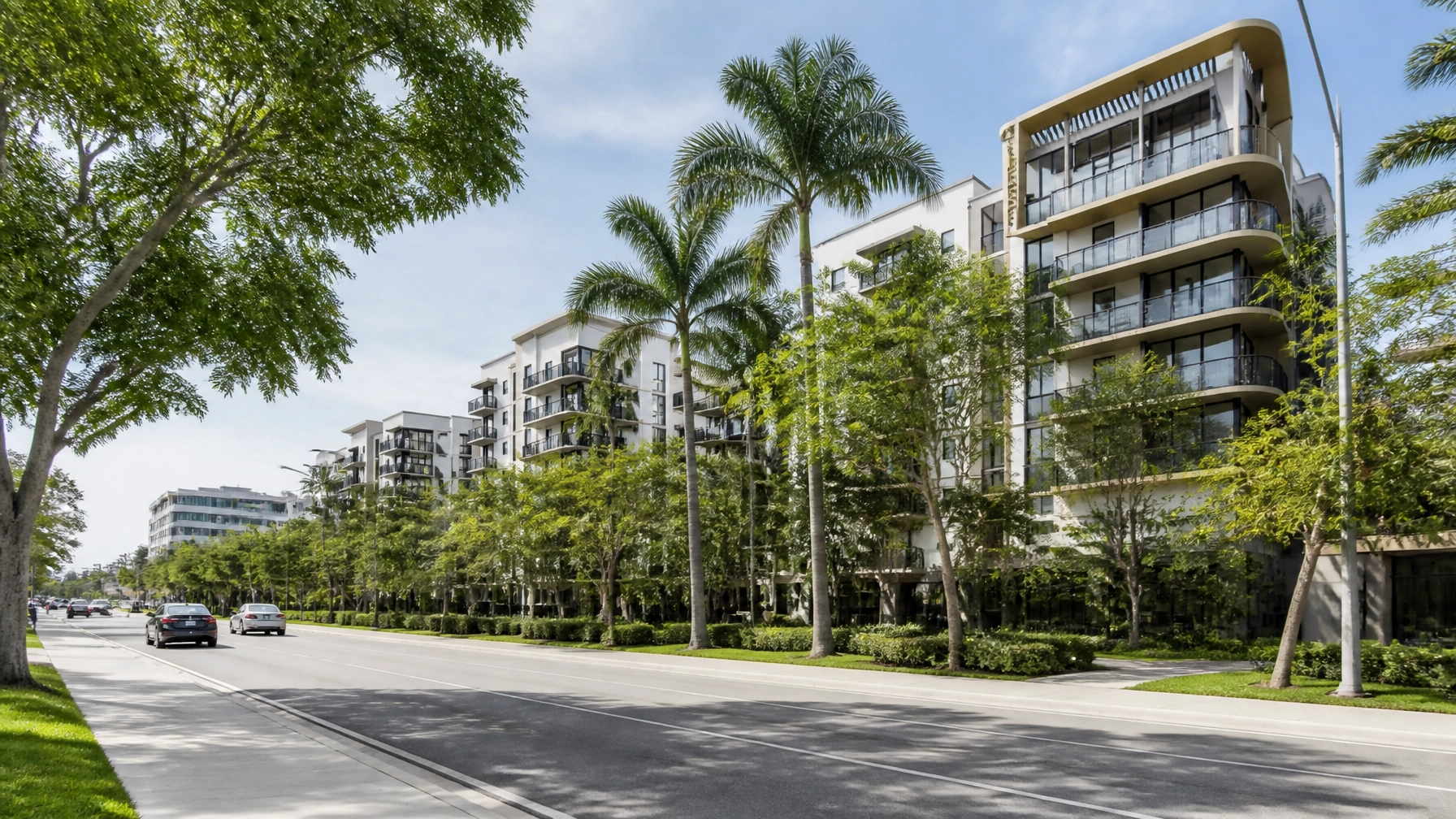
A proposed mixed-income apartment project in Fort Lauderdale’s Cypress Creek district is moving forward with a major public incentive request: approximately $8.83 million in city tax reimbursement financing in exchange for reserving 136 apartments for workforce housing.
Known as The Cypress, the eight-story development is planned for 400 Corporate Drive, on a 3.76-acre site near the Westin Fort Lauderdale hotel. Fort Lauderdale-based Affiliated Development is seeking the incentive as it advances an estimated $120 million project designed to add rental housing, commercial space and shared amenities to one of the city’s major employment corridors.
The Fort Lauderdale City Commission approved a Workforce Housing Incentive Agreement for the project during its August 18 meeting. The agreement formalizes the workforce housing commitment, but construction remains subject to additional approvals and development milestones.
The Cypress at a glance
- Developer: Affiliated Development
- Location: 400 Corporate Drive, Fort Lauderdale
- Planned height: Eight stories
- Total apartments: 340
- Workforce housing units: 136, or 40% of the project
- Workforce income limit: Households earning up to 120% of area median income
- Affordability commitment: 30 years
- Estimated development cost: Approximately $120 million
- Requested incentive: Approximately $8.83 million in ad valorem tax reimbursement financing
- Expected construction start: Second quarter of 2027, pending approvals
The proposal arrives as South Florida real estate markets continue to face a difficult mismatch between housing costs and local incomes. While Fort Lauderdale is attracting new businesses, investment and higher-paying jobs, many workers remain priced out of nearby apartments and forced into longer commutes or more expensive housing arrangements.
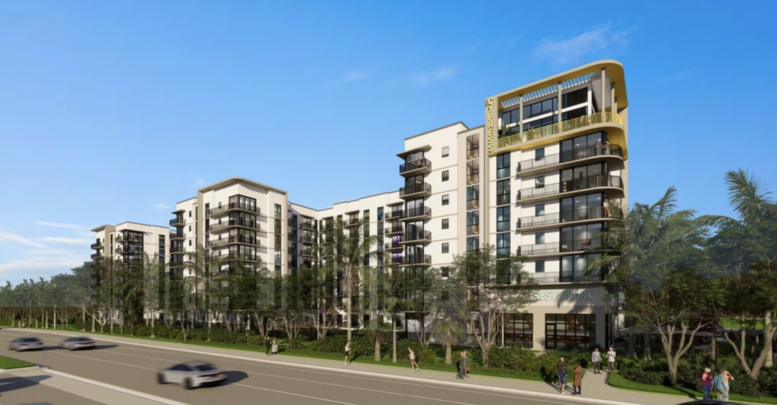
Concept image by Rinka, Affiliated Development’s in-house architecture firm, via Florida YIMBY.
How the workforce housing component would work
Of The Cypress’s 340 rental units, 136 would be restricted as workforce housing for 30 years. The project is expected to serve households earning up to 120% of the area median income, with units designated across income bands reaching 100% and 120% of AMI.
According to Broward County income data cited in project coverage, the county’s current median household income benchmark is $89,100. At 120% of that figure, the gross annual income threshold would be approximately $106,920 for a household using that benchmark. Actual eligibility limits generally vary by household size and are updated periodically.
That income range is different from deeply subsidized housing aimed at households at or below very low-income thresholds. Workforce housing typically targets employed residents who earn too much to qualify for traditional affordable housing programs but still struggle to afford market-rate rents in high-cost areas.
In Fort Lauderdale, that can include teachers, nurses, hospitality workers, public safety employees, administrative staff and other professionals whose jobs are essential to the local economy but whose wages may not keep pace with rents.
The remaining 204 apartments would be market-rate units. Planned floor plans include one-, two- and three-bedroom apartments, giving the project a mix intended to accommodate individuals, couples and families.
What the $8.8 million tax request means
Affiliated Development is pursuing the incentive through Fort Lauderdale’s Affordable-Workforce Housing Ad Valorem Tax Reimbursement Incentive program.
Unlike a conventional upfront grant, an ad valorem tax reimbursement generally returns some property tax revenue generated by a project over time. In exchange, the developer accepts long-term affordability requirements that are recorded through an agreement with the city.
That structure is intended to reduce the cost of financing workforce housing without requiring the city to fund the entire development directly. It also gives the municipality an enforcement mechanism: the workforce units must remain available under the agreed income restrictions for the full commitment period.
The arrangement creates an important public policy trade-off. The city is offering up to roughly $8.83 million in future tax reimbursements, while the project would add hundreds of apartments and create a long-term supply of restricted units. The value of the incentive must therefore be weighed against the public benefit of producing housing that may otherwise be difficult to finance at the same scale.
The commission’s approval establishes the incentive agreement, but the precise terms governing disbursements, performance requirements, timing and any repayment provisions are central to understanding the city’s total exposure. Those details would determine how the reimbursement is paid and what happens if the project is delayed or fails to maintain the workforce set-aside.
Affiliated previously used a similar approach for The Cove, another Fort Lauderdale workforce housing project. Coverage of that development described a city property-tax rebate capped at approximately $8.8 million, along with a separate Broward County tax rebate. The Cypress represents a continuation of the city’s effort to use tax policy to encourage mixed-income rental construction.
A redevelopment opportunity in Cypress Creek
The Cypress would be built on land currently associated with a hotel parking area. The developer has the site under contract from PFL VII LLC and plans to share a parking garage with the adjacent Westin Fort Lauderdale hotel.
The location places the project in the Cypress Creek business district, an area characterized by office buildings, hotels, transportation access and large commercial parcels. Redevelopment in such districts can add housing near jobs without requiring the conversion of established residential neighborhoods.
The development is also planned to include ground-floor commercial and amenity space. Proposed resident amenities include a swimming pool, clubroom and fitness center.

The project’s location could be significant for residents who work in North Fort Lauderdale, Oakland Park, Pompano Beach and nearby employment centers. However, the benefits will depend partly on transportation options, parking management and the final design of connections between the property and surrounding streets.
The development is not expected to begin construction until at least the second quarter of 2027, and that timeline is dependent on remaining approvals, financing and other conditions.
Why the proposal matters for Fort Lauderdale real estate
Fort Lauderdale’s housing debate has increasingly shifted from whether the city needs more apartments to how new apartments can serve residents across different income levels.
New market-rate projects add supply, but they do not automatically produce units that are affordable to households earning local wages. At the same time, deeply affordable developments often require substantial public subsidies, land contributions or state and federal financing.
The Cypress attempts to bridge those categories through a mixed-income structure. Forty percent of the apartments would carry workforce restrictions, while the market-rate portion could help support the project’s overall financial model.
That approach does not eliminate the affordability challenge. A household earning close to 120% of AMI may still face significant rent pressure, especially when accounting for childcare, transportation, insurance and other South Florida expenses. Workforce housing is also only one part of a broader housing strategy that includes preservation of existing apartments, transit-oriented development, zoning reform and protections against displacement.
Still, the scale of the commitment is notable. If completed as proposed, 136 restricted apartments would remain in the workforce housing pool for three decades: long enough to serve multiple generations of renters and provide a degree of stability in a market where affordability conditions can change quickly.

The larger affordability question
The Cypress reflects a growing reliance on public-private partnerships throughout South Florida. Cities are being asked to facilitate housing production while protecting taxpayers and maintaining funding for essential services.
For Fort Lauderdale, the key questions will be whether the incentive produces housing that would not otherwise be built, whether the 30-year restrictions are effectively enforced and whether the project adds meaningful value to the Cypress Creek area.
The proposal also illustrates the limits of relying on a single development to solve a regional problem. Even 136 workforce apartments represent only a small portion of the demand across Broward County. But projects of this type can become building blocks in a larger housing pipeline, particularly when they are located near employment centers and existing infrastructure.
As The Cypress moves through the approval and financing process, attention will likely focus on the final incentive terms, construction schedule, rents for the restricted units and the income-verification process for prospective residents.
For now, Fort Lauderdale has approved the framework for a development that would combine new market-rate housing with a substantial workforce component. The $8.8 million tax reimbursement request puts a price on the city’s participation: and raises the broader question facing communities across South Florida: how much public support is necessary to make housing attainable for the people who keep the region running?
Sources: Florida YIMBY’s project report, South Florida Tribune’s report on the Fort Lauderdale commission meeting, Broward County housing affordability data, and Fort Lauderdale’s housing resources.