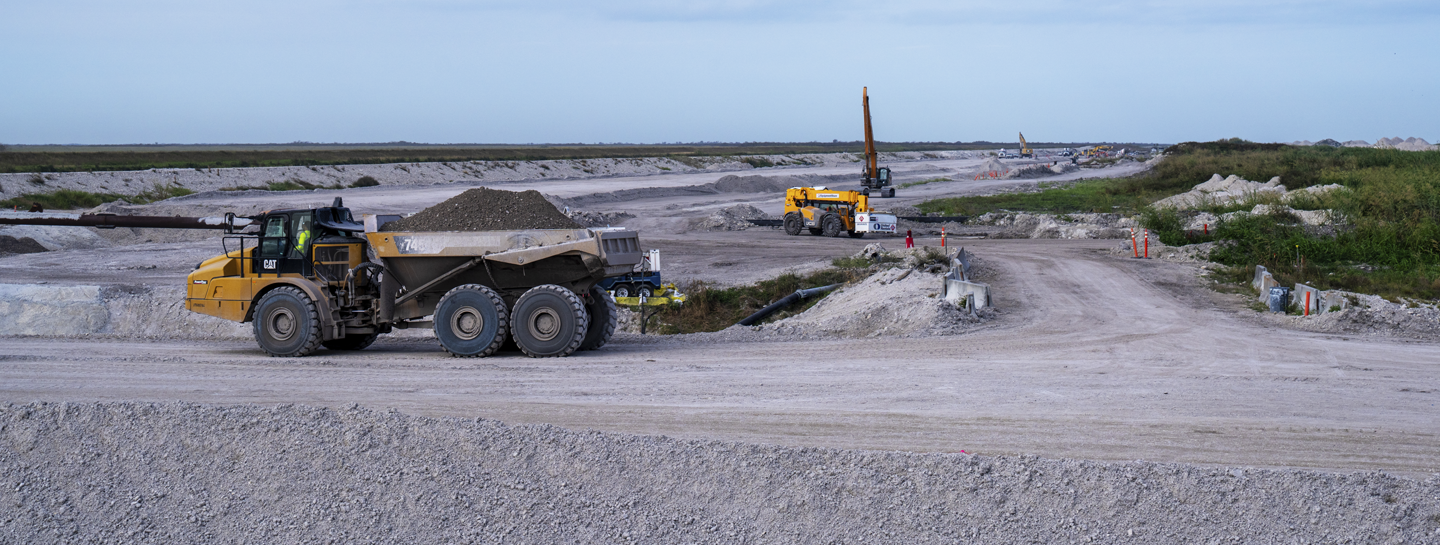
South Florida residents have two opportunities this week to follow decisions tied to Everglades restoration and the movement of water south of Lake Okeechobee. The U.S. Army Corps of Engineers will hold a virtual update on the Central Everglades Planning Project (CEPP) on Tuesday, Oct. 27. Separately, the Corps is accepting public comments through Monday, Nov. 2, on the initial filling of the Everglades Agricultural Area (EAA) A-2 Reservoir.
The timing matters. Lake Okeechobee entered the dry season well below its late-October average, while South Florida Digest’s Oct. 23 report found much of the southern Everglades unusually dry and Florida Bay saltier than its recent seasonal average. The agencies’ project plans will not, by themselves, determine how much water reaches the south. But they will help shape how new infrastructure is operated and how restoration projects progress.
Two different public checkpoints
The Tuesday meeting is an informational update on all phases of CEPP, not the A-2 Reservoir comment deadline. The Corps says project managers from the Jacksonville District and the South Florida Water Management District will provide updates on CEPP South, CEPP North, CEPP New Water and the Everglades Agricultural Area phase.
The separate comment period concerns a narrower question: how the A-2 Reservoir will be operated during its initial filling. The Corps says comments will inform development of its proposed initial-fill plan.
CEPP update: Tuesday, Oct. 27
The Corps’ virtual CEPP meeting runs from 2 to 4 p.m. Tuesday, Oct. 27, on Microsoft Teams. The meeting link lists meeting ID 993 302 238 670 and passcode hy9CP69x. The Corps also lists a phone option at 601-262-2433, conference ID 805 891 84#.
According to the Corps, CEPP is part of the Comprehensive Everglades Restoration Plan. Its focus is restoring more natural water flows into and through the central and southern Everglades by increasing storage and treatment south of Lake Okeechobee, improving conveyance and removing barriers to flow toward Everglades National Park. The meeting is an opportunity to hear progress updates across the project phases; the Corps’ notice does not describe it as a formal hearing on the reservoir’s initial-fill plan.
A-2 Reservoir comments: deadline Nov. 2
The Corps is preparing a National Environmental Policy Act (NEPA) analysis for the reservoir’s initial filling. The agency says this first phase will establish operating criteria and address dam-safety requirements as the reservoir fills for the first time.
Comments must be sent electronically by Nov. 2 to CESAJEAAReservoir@usace.army.mil. The Corps says comments will be summarized and used to inform development of the proposed initial-fill plan. Its EAA Reservoir project page provides additional project information.
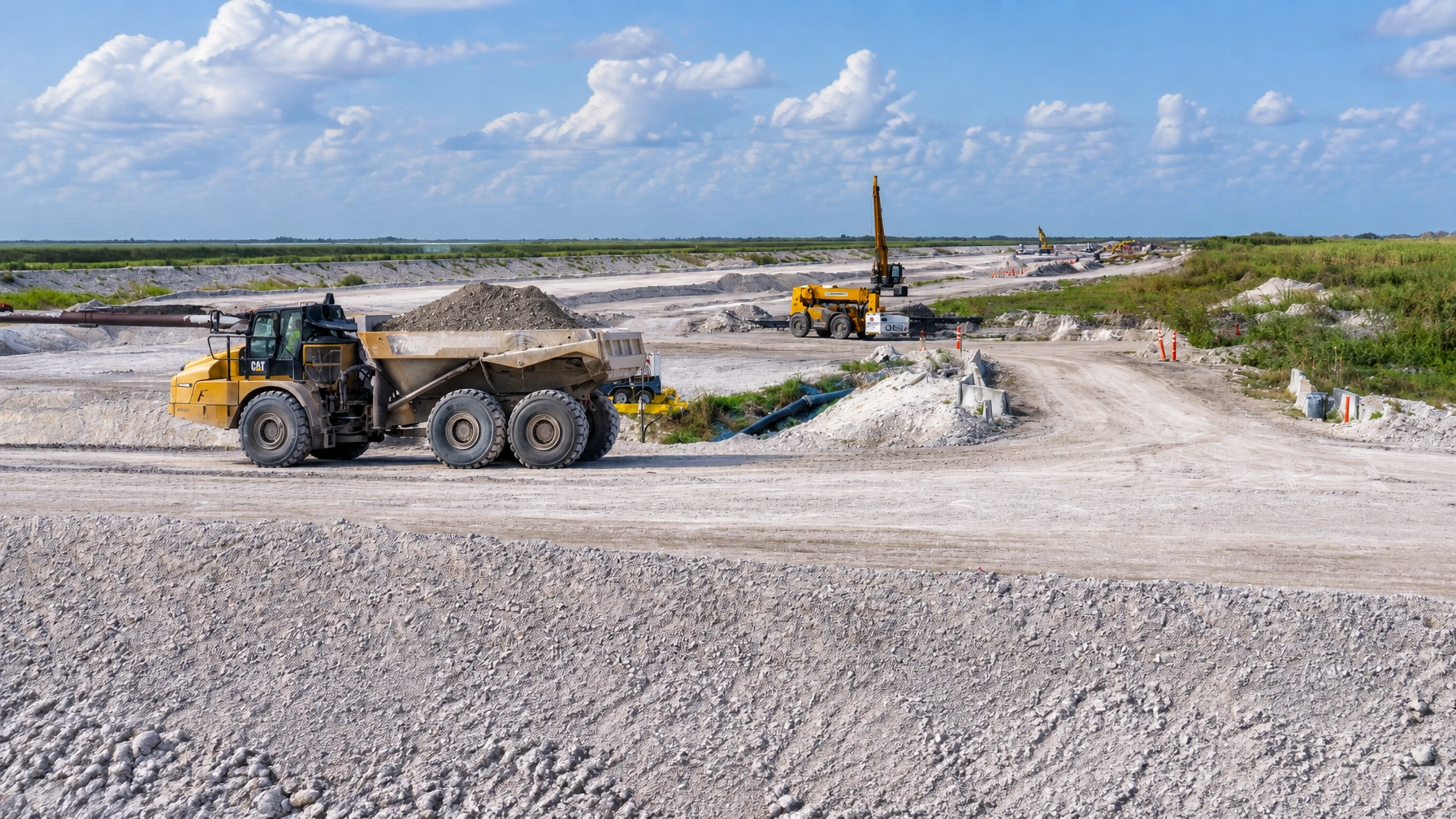
The reservoir has advanced through construction milestones this fall, according to South Florida Digest’s Oct. 6 report.
What the reservoir is designed to do, and what this review covers
The Corps’ scoping notice describes the A-2 Reservoir as a 10,500-acre project in Palm Beach County, south of Lake Okeechobee, with a planned capacity of about 240,000 acre-feet. The agency says the reservoir is designed to capture and store water, including Lake Okeechobee water, in coordination with stormwater treatment areas, before routing it south to the Water Conservation Areas, Everglades National Park and Florida Bay.
The Corps says the reservoir is also intended to help reduce undesirable Lake Okeechobee releases to the Caloosahatchee and St. Lucie estuaries. Those are project goals; the initial-fill review is not a guarantee that water will be available for every downstream need or that harmful coastal releases will be eliminated.
This distinction is important for people weighing in. The current NEPA scoping focuses on Phase 1 initial-fill operations and the criteria for filling the new reservoir safely. According to the Corps, a later Phase 2 regional operational-planning study may consider broader operations across Lake Okeechobee, the EAA, the Water Conservation Areas, Everglades National Park and the South Dade Conveyance System.
South Florida Digest reported on Oct. 6 that the reservoir had reached significant construction milestones involving its foundation and embankment. The same report noted criticism from Friends of the Everglades that the project is too small for the region’s restoration needs. That criticism concerns overall capacity; it does not change the scope of the current initial-fill comment period.
The dry-season backdrop
The water conditions add urgency to questions about storage, timing and flow, but the data show a complex situation, not a simple picture of water moving in one direction.
The U.S. Army Corps of Engineers’ Oct. 23 daily status report, as cited by South Florida Digest, placed Lake Okeechobee at 12.50 feet NGVD29. The reported long-term average for that date, based on 1965–2007 data, was 15.06 feet, making the lake about 2.6 feet below average. South Florida Digest also reported that the lake had risen slightly over the preceding week. In other words, it was low for the date, but not falling at that time.
Conditions farther south vary by location. In its Oct. 21 reporting, South Florida Digest cited South Florida Water Management District data showing that much of the south-central Everglades and Everglades National Park were below the 20th percentile for water depth for that time of year, while some northern Water Conservation Areas were much wetter.
The same South Florida Digest report put Florida Bay’s bay-wide average salinity at 34.8, still 11.7 above the recent seasonal average despite a week-to-week decline. The report noted that salinity differed across the bay, with central and western areas remaining above the hypersalinity threshold.

South Florida Digest’s Oct. 23 coverage of Lake Okeechobee and Florida Bay conditions described dry conditions across much of the southern Everglades.
The South Florida Water Management District has warned that persistent low water can reduce prey production, increase wildfire risk, accelerate peat oxidation and affect the Everglades’ ridge-and-slough landscape. These are potential consequences of prolonged dry conditions, not a claim that each effect is occurring everywhere now.
Why the sequencing matters
CEPP and the A-2 Reservoir are parts of a larger restoration system. The Corps says CEPP aims to improve the quantity, quality, timing and distribution of water moving through the central and southern Everglades. The reservoir’s intended role is to add storage and support treatment and conveyance south of the lake. How those pieces are built and operated affects when water can move through the system.
But water managers must account for more than the level of Lake Okeechobee. According to the Corps’ project description, water routed south would move in coordination with treatment areas and other infrastructure. Conditions in the receiving wetlands and operating requirements also matter. The current reservoir scoping process is specifically about initial-fill operations, not a final systemwide decision on water allocation.
For members of the public, the two checkpoints offer different ways to engage: attend Tuesday’s CEPP update to hear about the wider project phases, and send written comments by Nov. 2 if you have views on the A-2 Reservoir’s initial-fill operations. The official Corps notices and project pages provide the meeting and comment details; the South Florida Water Management District’s Oct. 20–26 operations memorandum provides additional operational context.

Florida Bay is part of the southern Everglades system discussed in the agencies’ restoration and water-management plans.
With the dry season beginning and Lake Okeechobee low for the date, this week’s proceedings put attention on both the broad sequencing of Everglades restoration and the practical details of filling a major new reservoir. The public meeting is Tuesday, Oct. 27. The deadline to comment on the A-2 Reservoir initial-fill scoping is Nov. 2.