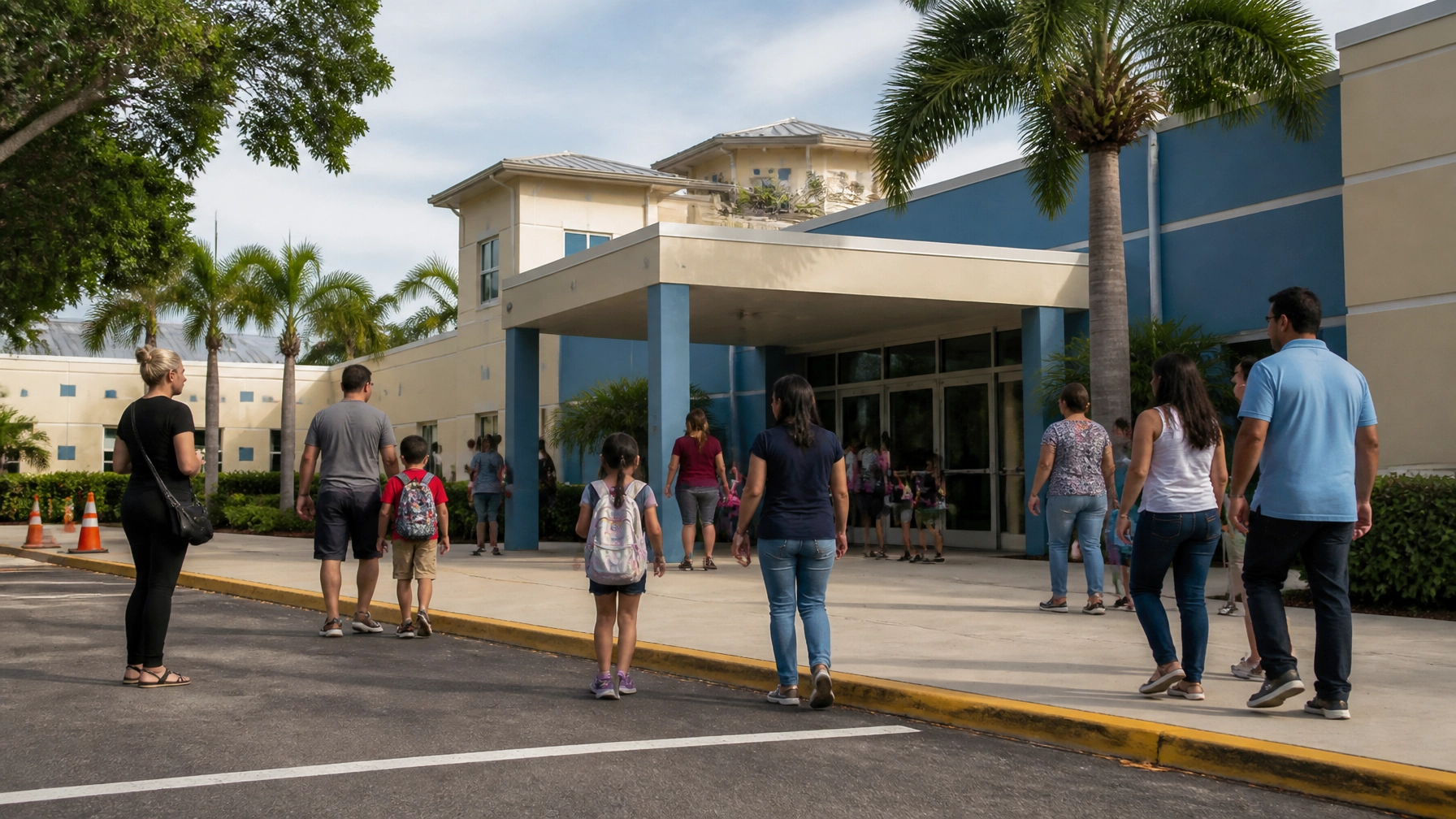
South Florida’s public schools are beginning the 2026–27 academic year with more than 1,300 advertised teacher and staff vacancies across four counties, adding pressure to districts already dealing with rising costs, employee turnover and a difficult hiring market.
The latest vacancy snapshot compiled by the Florida Education Association lists 1,413 open positions in Broward, Miami-Dade, Palm Beach and Monroe counties. Of those, 676 are teaching positions. The remaining openings include education support roles that keep schools operating, such as counselors, paraprofessionals, nurses and other professional staff.
The figures, reported by WLRN, are a snapshot of jobs advertised on district websites ahead of the school year. They do not necessarily mean every position will remain unfilled once classes begin, but they show the scale of the recruitment challenge facing South Florida districts.
Broward and Palm Beach account for most openings
Broward County has the largest number of advertised vacancies among the region’s major school systems, with 572 total openings, including 358 teachers.
Palm Beach County reported 556 vacancies, including 276 teaching positions. Miami-Dade listed 270 total vacancies, with 36 identified as teacher positions, while Monroe County reported 15 openings, including six teachers.
Combined, Broward and Palm Beach account for nearly 80% of the vacancies in the four-county South Florida snapshot.
The numbers also reflect differences in how districts classify and post open positions. Miami-Dade’s live instructional opportunities portal showed dozens of openings posted in early August, including positions for elementary education, math, science, English language arts, exceptional student education, foreign languages, music, reading and career education.
Those postings provide a clearer picture of the roles districts are still trying to fill. They also highlight that the shortage is not concentrated in a single subject or grade level.

A statewide problem with local consequences
South Florida’s staffing shortage is part of a broader statewide trend. The FEA’s August data shows approximately 3,157 advertised instructional vacancies statewide. When other education staff positions are included, the total rises to about 5,536 vacancies.
The statewide figure is hundreds higher than the comparable count from the same period last year, according to WLRN. That increase comes after Florida officials reported a decline in teacher vacancies during the 2025–26 school year.
The conflicting indicators point to a complicated situation. A reduction in posted vacancies does not always mean districts have solved their staffing problems. Positions may be eliminated, left unadvertised or temporarily filled by substitutes and educators working outside their certification areas.
The FEA has also warned that the number of certified teachers being replaced by out-of-field or temporary teachers has nearly doubled over the past five years. The organization says educator turnover is accelerating, with 31% of teachers in the previous year having fewer than four years of experience.
That level of churn can make it difficult for schools to build stable teams, particularly in high-need subjects and communities where hiring has traditionally been challenging.
Why educators are leaving
The FEA attributes the staffing crisis to several overlapping factors, including compensation, housing costs, state policy and working conditions.
Florida ranks 50th nationally in average teacher pay for the third consecutive year, according to the association. At the same time, the cost of living has climbed sharply across South Florida. Rent, insurance, transportation and home prices have made it increasingly difficult for education workers to live near the schools where they work.
For many teachers, the financial calculation is straightforward: salaries that may have been manageable several years ago no longer stretch as far in Miami-Dade, Broward or Palm Beach counties.
The affordability issue extends beyond teachers. Bus drivers, classroom aides, custodians, cafeteria workers, nurses and other school employees compete for workers with hospitals, hotels, retailers, logistics companies and other employers throughout the region.
That makes the staffing crisis relevant not only to families and school officials, but also to the broader South Florida business community. Public schools are among the area’s largest employers, and their ability to retain workers affects local household stability, workforce participation and economic development.
Broward County Public Schools continues to recruit teachers, substitute teachers, counselors and special education professionals. Its talent acquisition office advertises virtual interviews, recruiter appointments and alternative pathways for applicants who hold a bachelor’s degree but may not yet have a Florida teaching certificate.
What the shortage could mean for students
When a permanent teacher is unavailable, schools may rely on substitutes, long-term temporary hires, internal transfers or larger class sections. The immediate response varies by campus and subject, but the effects can reach students quickly.
A rotating series of teachers can disrupt lesson planning, classroom routines and relationships between students and educators. Those challenges can be especially significant for students receiving special education services, English-language learners and children who need additional academic or behavioral support.
Schools may also be forced to reduce or delay programs when there are not enough qualified staff members to lead them. Electives, intervention periods, counseling services, advanced courses and extracurricular activities can all be affected by staffing gaps.
The FEA says students face larger classes, reduced access to critical programs and widening opportunity gaps when vacancies persist. The organization’s president, Andrew Spar, has argued that students should not have to cycle through several teachers in one academic year.
Still, the vacancy data should be read carefully. An advertised opening is not the same as a confirmed empty classroom on the first day of school. District hiring changes daily, and some vacancies may be filled after the FEA count was completed. Conversely, a position may be technically staffed by a substitute or temporary employee while remaining unresolved from a long-term staffing perspective.

Families may see the impact beyond the classroom
Parents are likely to notice staffing pressures through delayed responses from school offices, changes in bus routes, larger class sizes or reduced availability for counseling and student support.
Transportation and after-school care can be particularly sensitive to workforce shortages. A lack of bus drivers may require route consolidations or schedule changes. Shortages among support professionals can make it harder for schools to provide timely services to students and families.
For working parents, even small changes can create major disruptions. A late bus, canceled program or change in dismissal procedures can affect commuting, childcare and work schedules.
That makes the issue a community concern rather than an internal education department matter. South Florida’s public schools serve hundreds of thousands of children, and their operations are closely tied to the region’s labor market.
What districts are doing to respond
Districts are using several approaches to attract applicants, including recruitment fairs, virtual interviews, alternative certification pathways, signing incentives and programs designed to help candidates transition into teaching.
Broward’s “Ignite Your Teaching Career” program is aimed at people with a bachelor’s degree who are considering education as a career change. The district also encourages applicants to pursue substitute teaching as a way to gain experience in its schools.
Miami-Dade’s current openings show the district recruiting across a wide range of instructional and student-support fields. The positions include traditional classroom jobs as well as school psychologists, social workers, mental health coordinators, speech-language pathologists and other specialists.
Those efforts may help districts fill immediate vacancies, but retention remains the larger test. Hiring campaigns can put more adults in schools at the start of the year; keeping them there requires compensation, manageable workloads, professional autonomy and a cost of living that makes the job sustainable.

The issue to watch as the school year begins
The 1,413-vacancy figure offers an important starting point, but the more revealing measure will be what happens after the first day of school.
Districts, families and policymakers will be watching whether vacancies decline as hiring continues, whether schools rely more heavily on substitutes and out-of-field teachers, and whether staffing gaps persist in specific subjects or neighborhoods.
For now, the numbers show a public education system entering a new school year with thousands of open roles across Florida and more than 1,300 advertised teacher and staff vacancies in South Florida alone.
The challenge is not simply filling jobs. It is building stable school communities in a region where educators are increasingly asked to balance demanding work with one of the nation’s most expensive housing markets.